Knowth Megalithic Tomb

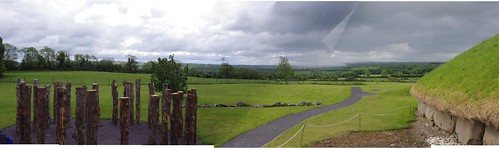
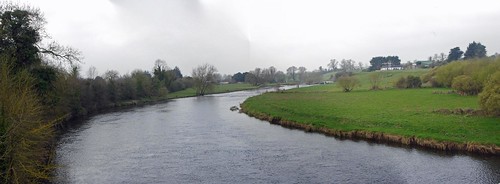
knowth panorama

Up in the Boyne Valley, about an hour North of where I live in Dublin, is a place that has been inhabited for thousands of years. It’s known as the Boyne Valley. It’s mostly small farming communities filled with sheep and horses, and encompasses parts of two counties – Meath and Louth. I’ve already posted about the Hill of Tara, which is located here, and also the Hill of Slane. Just up the road is the New Grange Passage tomb. Another of the historic places that are located in this valley are even older than those. They are a set of 3 ancient mounds that are collectively known as Passage tombs – New Grange, Knowth, and Dowth (pronounced know-th and dough-th). Dowth isn’t open to the public, and Knowth is only opened during the summer months, because of the delicate nature of the tombs.
IMGP1526-5

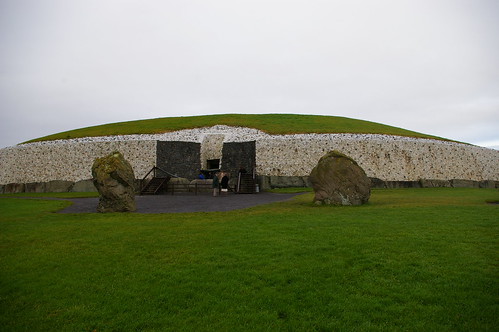
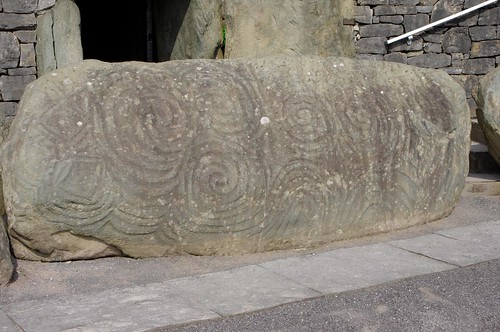
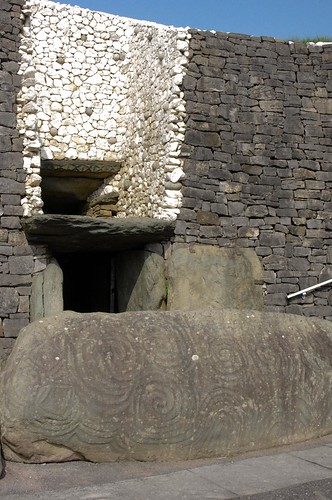
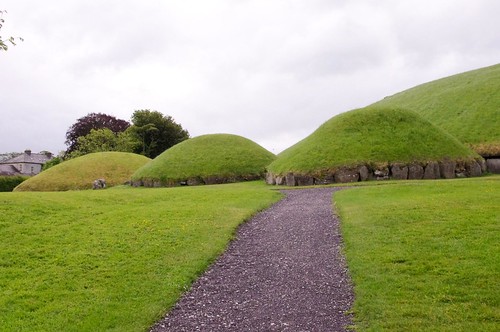
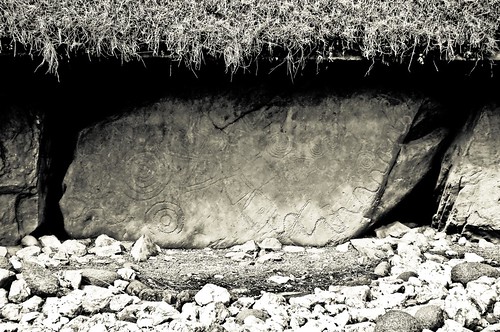
Knowth is the largest of all passage graves situated within the Brú na Bóinne (Boyne Valley Tomb) complex. The site itself consists of one large mound and 17 smaller satellite tombs, and I’ve only made it to visit here once (I’ve been to New Grange 4 times now). The largest mound at Knowth has been esitimated to date from between 2500 and 2000 BCE, about 5000 years ago (Again, older than the Egyptian Pyramid at Giza) with the satellite mounds ranging in age from the same time. The outside and inside of the largest mound is one of the largest repositories of Megalithic artwork carved on stone.
knowth megalithic art stone

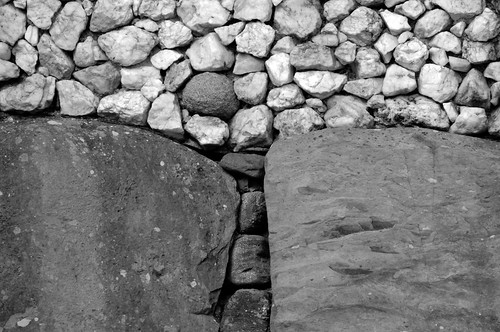
Similar to the complex at New Grange, on the front half of the tomb used to be made up of sparkling white quartz which was brought in from about 80 km away in the Wicklow Mountains. However, unlike the New Grange complex, this has not been fully restored. The main hill has been partially excavated and reinforced, but the quartz outside of the building remains as rubble around the exterior. Additionally, only a portion of the 17 satellite mounds have been dug out and reinforced.
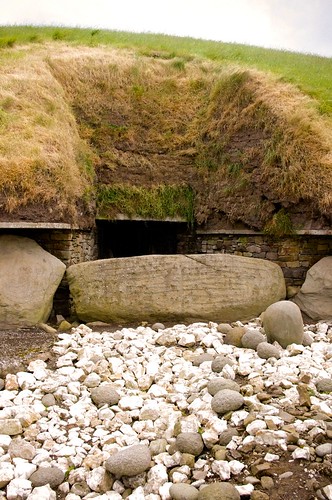
IMGP1537-16

Essentially, what happened was that over time, earth collected around the mounds and erosion caused the soil / turf on top of the mounds to gradually sluff off. The result was that until the 1700’s most people just thought that these were simply giant “hills”. In the 1600-1700’s, portions of the tombs were dug up for rock (to use for building) and other portions were plowed under for farming. As time went on, it was realized to be a historical site and archaeologists became interested in the area.
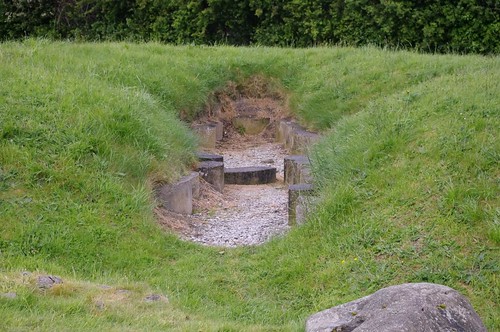
IMGP1533-12

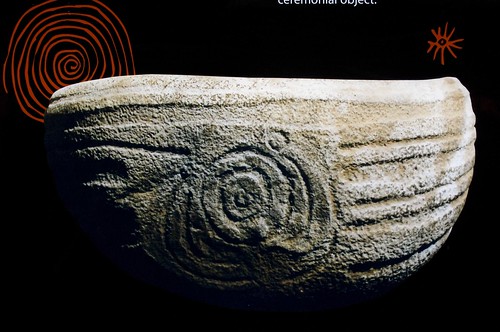
Excavations and partial restoration have resulted in a safe site to visit, with many artifacts now housed in a museum and visitor center nearby. Some of the artifacts include a beautiful mace head, a carved basin stone (for housing remains), and tools from the various uses of the site. (After the ancients went away, the complex was used during the iron age for housing and also as a fortress.)
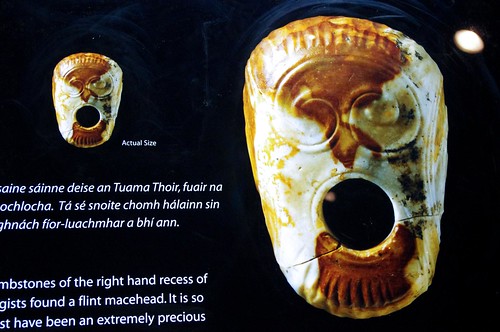
The Macehead (see next pic for info)

The Basin Stone

Eventually, Knowth and the other megalithic sites of the Boyne Valley were designated a World Heritage Site by UNESCO. For more Pictures of this site, please see my flickr set.

Share

New Grange Passage Tomb

Boyne1

Up in the Boyne Valley, about an hour North of where I live in Dublin, is a place that has been inhabited for thousands of years. It’s known as the Boyne Valley. It’s mostly small farming communities filled with sheep and horses, and encompasses parts of two counties – Meath and Louth. I’ve already posted about the Hill of Tara, which is located here, and also the Hill of Slane. Anther of the historic places that are located in this valley are even older than those. They are a set of 3 ancient mounds that are collectively known as Passage tombs – New Grange, Knowth, and Dowth (pronounced know-th and dough-th). Dowth isn’t open to the public, and Knowth is only opened during the summer months.

IMGP6796

The New Grange Passage Tomb, however, is open year round and has become one of my favorite places to take friends and family when they come to visit in Ireland. The passage grave dates to 3000 B.C. – meaning it predates both Stonehenge and the Great Pyramid of Giza in Egypt. For most people who come to visit, they’ve never seen or experienced something so ancient – and so well constructed that it’s still dry inside. (Yes, you can go inside as part of the tour – but it is a tight squeeze!).

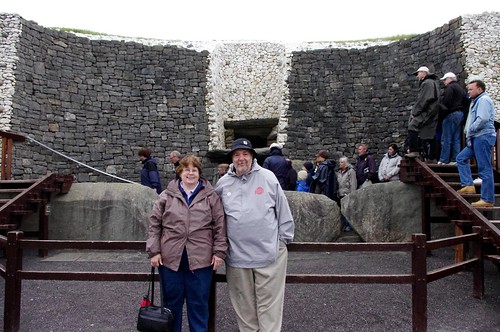
Mom & Chuck
(Mom and Step Dad at New Grange back in May 2011)

New Grange is the largest of all the tombs, and sits overlooking a bend in the Boyne River. The tomb covers an area of about one acre and consists of a man-made beehive shape with and turf on top. The on the front 1/2 the edge of the tomb is made up of sparkling white quartz which was brought in from about 80 km away in the Wicklow Mountains. The whole mound sits within a circle consisting nearly 100 large granite kerb stones, some of which are carved with Neolithic artwork in the form of geometric designs.

IMGP0861-10

IMGP0863-12

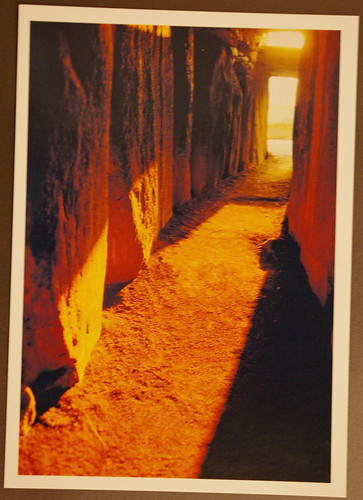
Over the entrance to the tomb is something called a roof box. By design, at sunrise on the winter solstice (around December 22nd) every year, when the sun shines (Sometimes it doesn’t happen – this is Ireland after all!) it goes through the hole over the door and along the entry passage lighting the beehive shaped burial chamber for a few minutes. This shaft of sunlight lights up the carvings within the chamber. At all other times of the year the tomb remains dark inside.

IMGP0862-11

IMGP6860

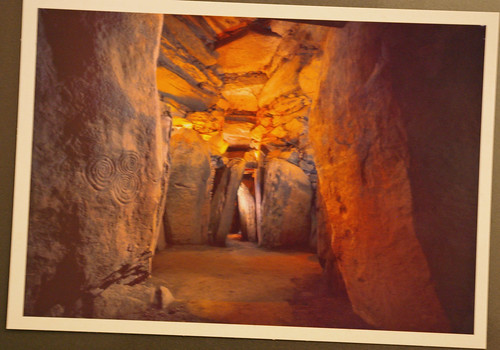
The interior of New Grange consists of a long entryway leading to a cross-shaped chamber at the heart of the mound. This burial chamber has a beehive shaped roof which rises steeply to a high-point of close to 20 feet. There are three internal coves off of the beehive. These recesses have a large center stone bottom, which was carved into a basin shape and archaeologists believe they would have held the cremated remains of those who had died. During excavation of the tomb, the remains of five people were found.

IMGP6858

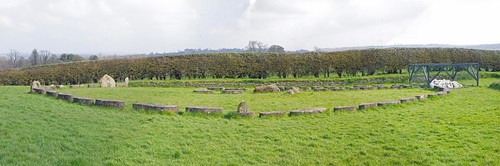
In 1962, restoration work on the tomb began under the supervision of Professor Michael J O’Kelly. The structure was taken apart piece by piece and then reconstructed. This work continued until 1975. Since then, the outside of the mound has been put back together, including a stone dwelling, large free standing stones, and smaller standing stones, and a ceremonial ring.

ring of stones

For more pictures from New Grange, you’re welcome to see my flickr set.

Share

Slane Abbey Ruins

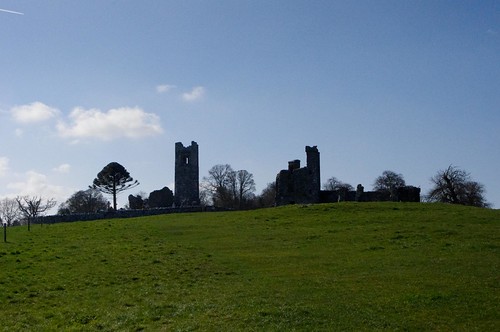
Looking up the hill at the ruins

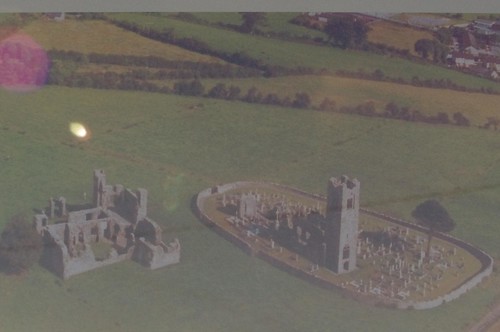
The Hill of Slane towers 158 metres (521ft) above the surrounding landscape. On one side of the hill is a ring structure and mound, the other the remains of a monestary which was in use between 1100 – 1750’s. The cemetery remains in use today.

IMGP0904-13

In ancient mythology, the Fir Bolg king Sláine (Slane) was said to have been buried here. In Christian history the hill became established as the place where St. Patrick lit the first paschal fire in 443 AD in direct defiance of the High King Logaire who forbid any other fires while a festival fire was burning on the Hill of Tara.

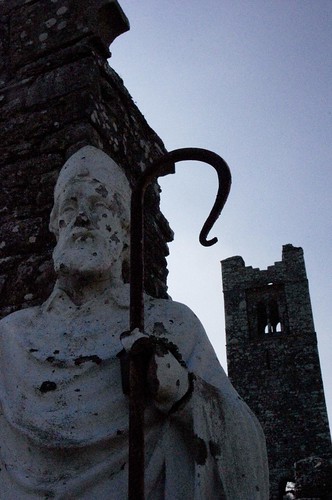
St Patrick statue at Abbey ruins

According to legend, Logaire was so impressed by Patricks devotion that, he allowed St. Patrick to continue his missionary work in Ireland. It is somewhat more certain that Patrick appointed a bishop of Slane, Saint Erc on this location around 435 AD.

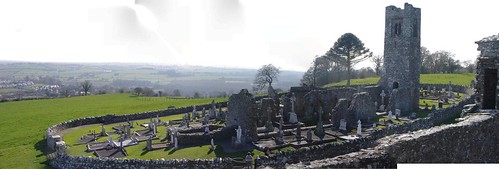
Hill of Slane Abbey Panorama

On a clear day, from Slane hill you can see the mounds of New Grange and Knowth, with the town of Drogheda and the Irish Sea beyond.

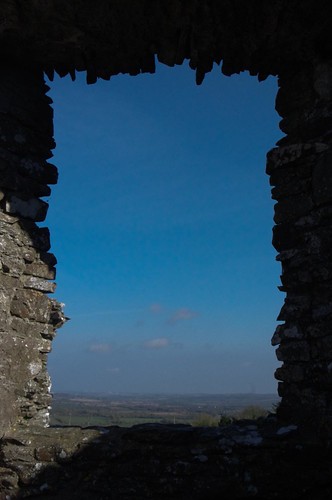
View out the window

To the North the view extends as far as Slieve Gullion (well into Northern Ireland), and to the South as far as the Sugarloaf Mountain in Wicklow.

Abbey and Castle ruins hill of slane

More photos from the full set are up on flickr.

Share