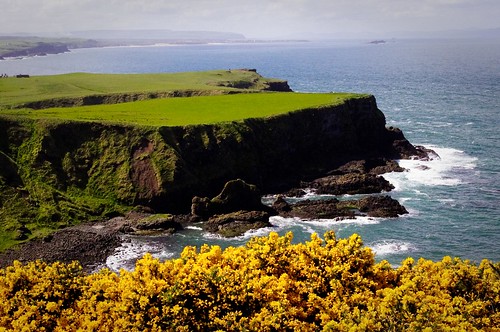
Dunseverick castle ruins

Dunseverick castle ruins
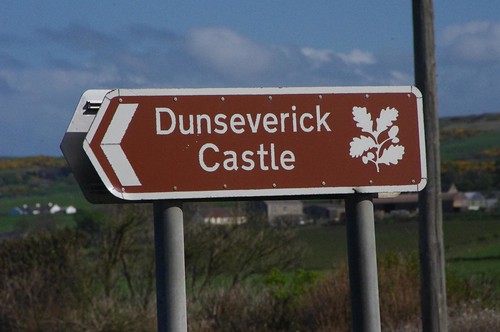
This way to Dunsverick Castle

Last April, I took a beautiful day trip excursion to the Giant’s Causeway with my friend Jacqui and her long time friend, Liz to see the coast of Northern Ireland. I happened to have a map with us (let’s just say we had an adventure in getting there because the GPS ran out of battery) and we ended up taking the scenic route on the way up. One there, we saw the Giant’s Causeway, and decided to pause for the other very close by sites. I would have to say that the most unimpressive site was the castle ruins at Dunsverick Castle.
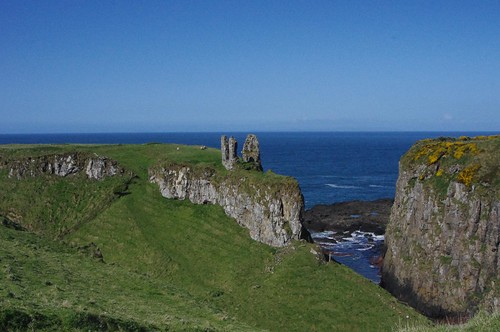
Dunseverick castle ruins

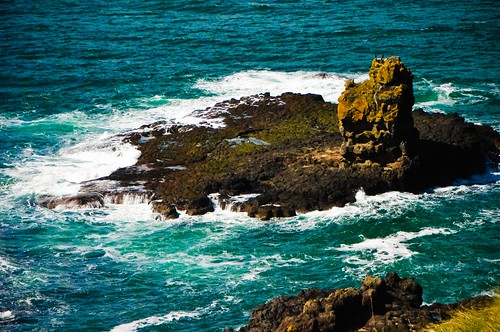
Basically, this castle was built originally sometime around 1525 BC. Surrounded by the ocean on three sides,Dunseverick was a key ancient site in Ireland, one of the royal roads from Tara, seat of the Kings of Ireland ended here. The site was originally founded by Sobairce, one of the Kings who built a fortress here to rule the ancient Kingdom of Dariada, the location is named after him – Dunsobairce (Fortress of Sobairce) now Dunseverick. Around 500 AD, St. Patrick visited the location, and around 900 AD, the Vikings are said to have raided the fortress extensively. Sometime around the 1500’s AD, a small fortress with round tower was built on the spit of land, and these are the remains that are there today. (There are also sheep, who apparently are great climbers down one steep drop and up to the top of that spit of land…)
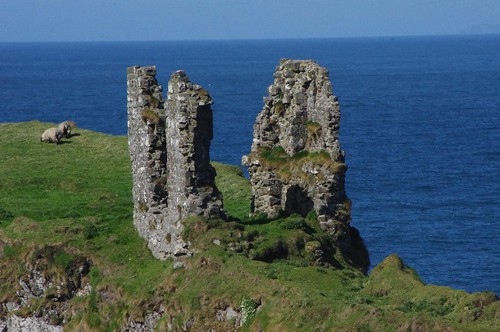
Dunseverick castle ruins
All that remains of a once impressive fortress… time and tide wait for no man…

You can see more photos on the Giant’s Causeway flickr set here.

Share

Giant’s Causeway

IMGP1251-7

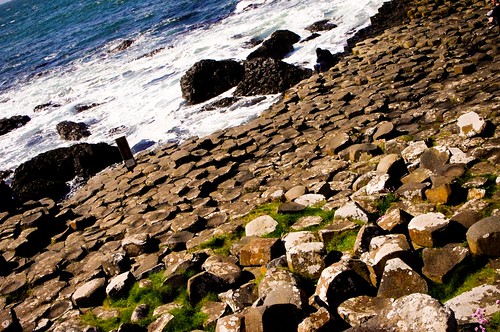
Far on the north coast of Ireland is an area of about 40,000 interlocking naturally occuring basalt columns. They were caused by a volcanic eruption, and is a Unesco world heritage site. Last April, I took a beautiful day trip excursion to the Giant’s Causeway with my friend Jacqui and her long time friend, Liz to see this fascinating place.

IMGP1313-53

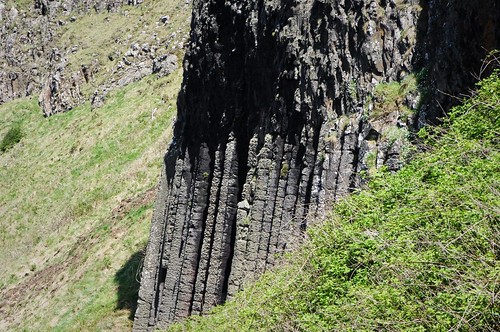
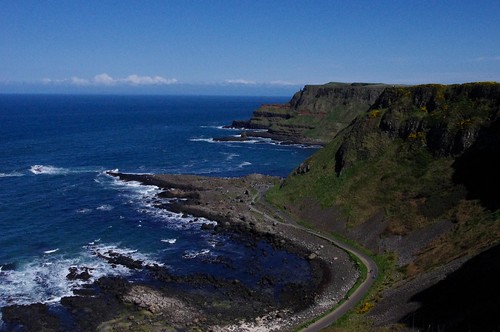
The causeway itself is actually an area of several horse-shoe shaped inlets which can be reached by a cliff top walk, a hike down a series of 162 steep stairs (known as the shephards steps), or a cheeky little bus taken from the Giant’s causeway hotel. On the way down, we chose to take the cliff walk/stairs – and then the bus back – because the weather was so beautiful. We went past the Pipe Organ (below), and into a giant bowl shaped area known as the Ampitheater.

IMGP1262-18

On the way back we passed the Giant’s Boot, pipe, and also his Camel. According to Irish legend, the Irish warrior Fionn mac Cumhaill (Finn McCool) built the causeway to walk to Scotland to fight his Scottish counterpart Benandonner. At some point, tired of waiting, the Scottish Giant came across the water, and somehow, Fionn found out. Realizing that the scottish giant was larger than he himself, Fionn asked his wife to dress him up as a baby. When Benandonner saw the baby, he thought that Fionn must be a truly large giant indeed (because of the size of the baby) and fled back to Scotland, leaving his boot and pipe behind him on the beach.

IMGP1306-48
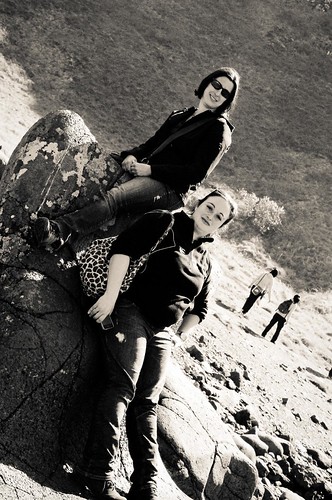
Jacqui and Liz posing on the boot…

IMGP1277-31
Looking out towards the pipe stem
IMGP1247-3
The Camel, sleeping after the long walk (Giants need something larger than a horse, apparently)

You can see more photos on the Giant’s Causeway flickr set here.
Share

Lutherstadt-Wittenberg

I’m back processing a few old pictures (and some more recent ones) in between trying to do school work and work overtime at my job. Now that the weather in Ireland has reverted to the chill of fall, let’s see if I can get some new stuff posted and viewable from my busy life. 🙂

IMGP1918-28

This is more from my day trip to Lutherstadt-Wittenberg, Germany back in 2009 with the Toytown Photo group. It took place on September 19, 2009 – two years ago today.

IMGP1931-40

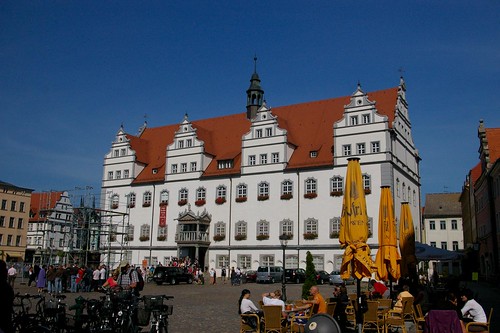
The Town Hall

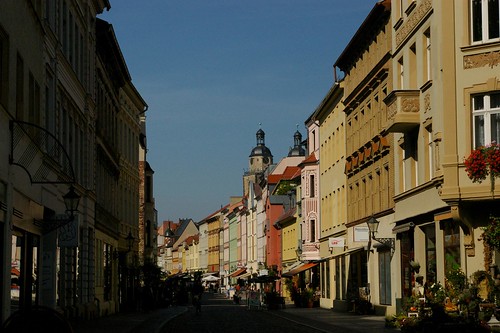
Population about 50,000, this town sits along the beautiful Elbe river. This is the famed town of Martin Luther, where he wrote and posted his edicts on the church doors as part of the Protestant revolution. When in Germany, this town is one of the “must see’s” because of its place in history and the role it played as a part of “enlightenment”.

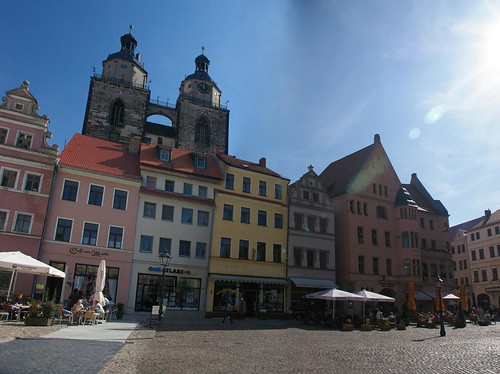
Wittenberg town square merge

The church towers are for the city church, where Martin Luther preached his then controversial message.

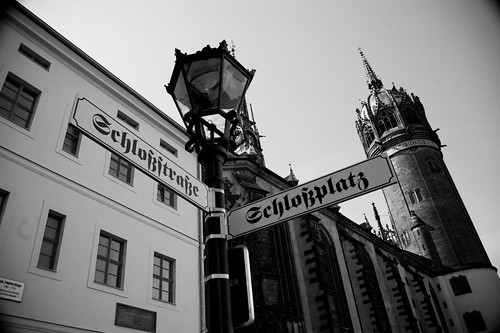
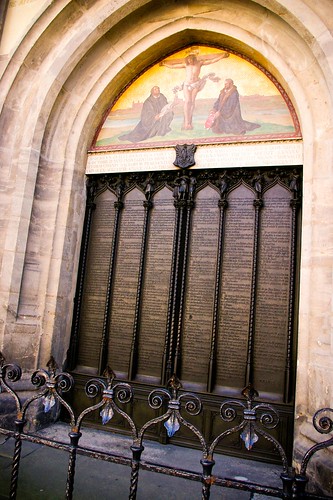
The main pilgrimage point in town is actually the Schloss kirche, upon which Martin Luther nailed his 95 Thesis on the door of the church back on October 31, 1517. The original door no longer exists, but today, the door is metal with a cast plate of the thesis itself.

IMGP2001-106

IMGP2008-113

For more pictures, you can check out the three flickr sets below:

Lutherstadt-Wittenberg

St. Marien Lutherstadt (City Church)

Schloss Kirche Wittenberg

Share