Happy New Year 2012

This year, rather than go into the Dublin City center to have some crazy party and trouble getting back out, I went over to Paddy’s flat for the New Year’s Eve celebrations. It was a grand party, with plenty of people, a bit of foosball, and one interesting tradition that I was familiar with from living in Germany – the fortune telling by melting lead over a candle. I have been wanting to explain this – and it’s slightly amusing that I had to come to Dublin – to see a German tradition in action.

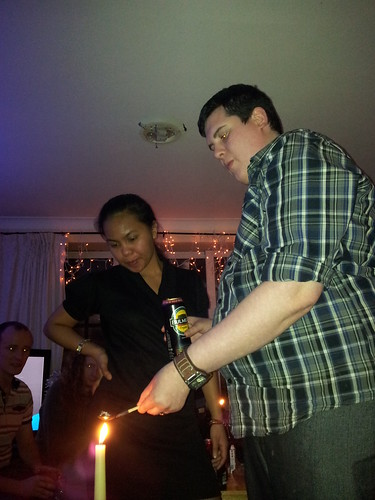
The spoon and lead

Basically, what happens is that you buy this package of lead that is in various “lucky” shapes. These are things like coins, pigs, mushrooms, etc. (I’m not sure why some are lucky – but each culture has their own connections). You take the spoon and hold it lightly over a candle and get the lead warm until it melts…

Melty Melty little lead

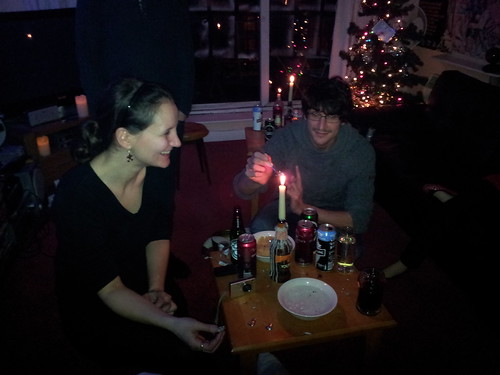
Once the lead is melted, you quickly pour it into a bowl of ice water (you can see the ice water in the bottom here)

New Year 2012

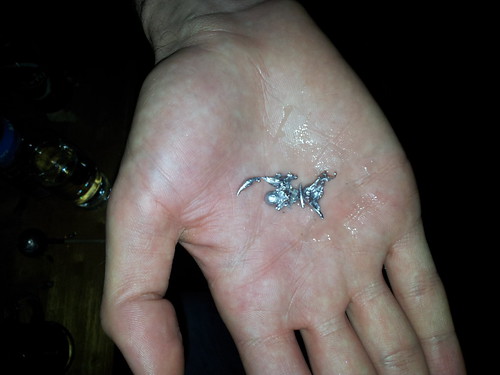
The lead quickly hardens – and then you pluck it out.. and try to determine what shape your lead piece has taken –

Is it a flower?

Is it a butterfly?
That's a lump of lead!

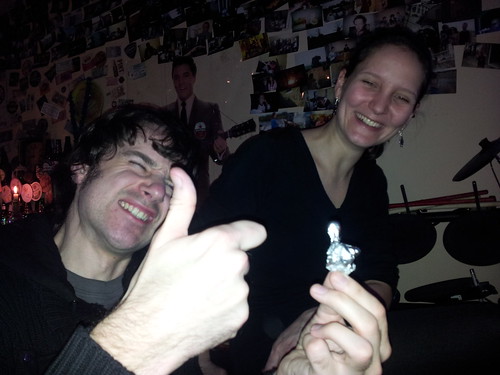
Is it a blob or a thumb’s up?
Rock on!

Once you kind of determine what shape it is – you look on the back of the package and get your “fortune” for the next year –

Fortunes on the box

some of which are quite amusing – even if you have to translate from German.

About the time this was complete, it was time to pop our head out the door for the New Year’s count down, and midnight kisses all around. Welcome to 2012 – the end year of the Mayan Calendar. Here’s hoping it’s a great one!

Share

Powerscourt Estate and Gardens Day Trip

IMGP1760-45

In the end of May, my mom and step dad came to Ireland to visit. We took several day trips about the area and had a really great time seeing each other. On May 31, mom and I went to Powerscourt Estate and Gardens because I had a discount ticket for the bus trip down which included the entry.

Bus tour with a long winded guide...
(me and mom on the upper deck of the bus – don’t we look happy)

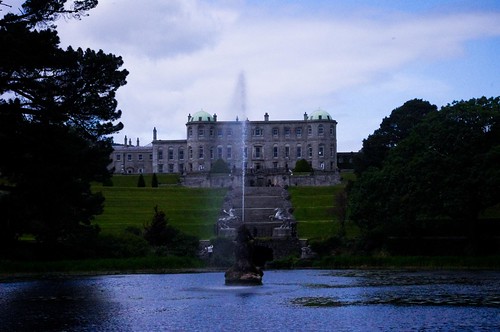
Powerscourt is situated in the Wicklow mountains about 35 minutes south of Dublin, and was originally built as a country castle estate around 1300 by Baron La Poer (Anglocised to Powers). The castle’s position was of strategic military importance, in that the castle’s owner could control access to the nearby Dargle, Glencree and Glencullen rivers. The original home built here was 3 stories and had some 68 rooms. Over time, the castle changed hands many times.

IMGP1724-10

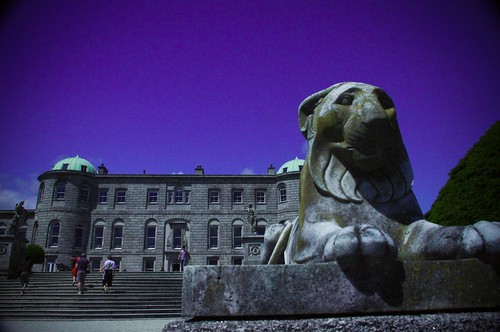
In the 1700’s, the castle was remodeled to have the current palace built around the remnants of the castle which had been gutted by fire. In the 1800’s, the house underwent renovations to “modernize” the estate. Mervyn Wingfield, seventh Viscount Powerscourt, decided that the grounds needed redone as well.

IMGP1767-52

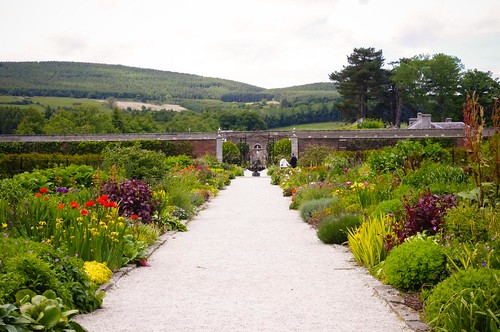
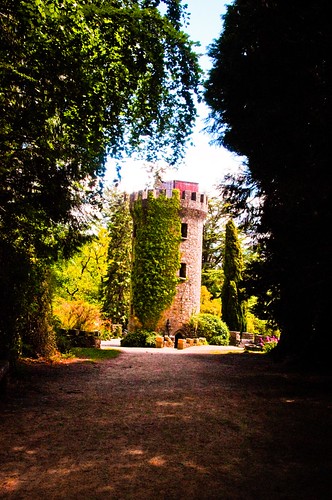
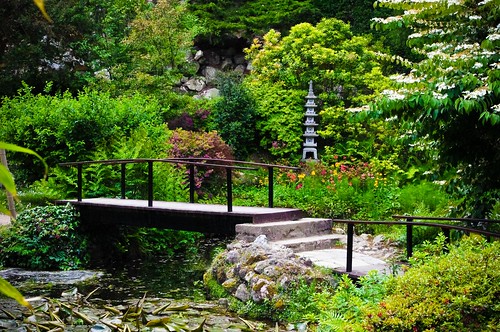
He had the grounds were laid out include a walled garden (above), tower valley (with stone tower – below),

IMGP1729-15

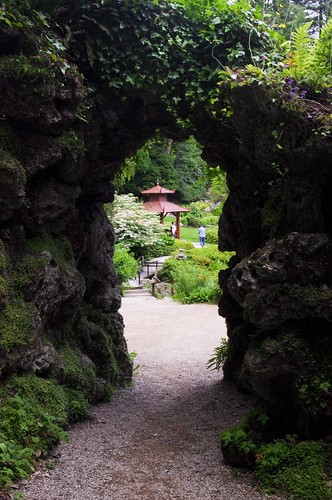
fish pond, grottoes,

IMGP1756-41
(Grotto looking into the Japanese Gardens)

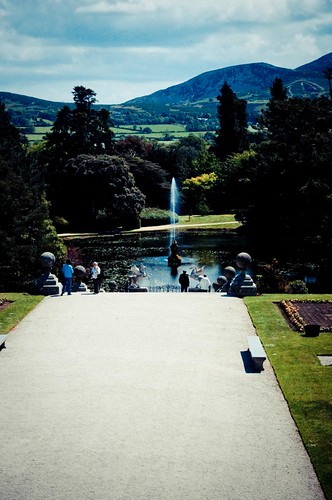
and terraces – all of which were said to have been inspired by a visit to Versailles. A century later, the Japanese garden

IMGP1745-1

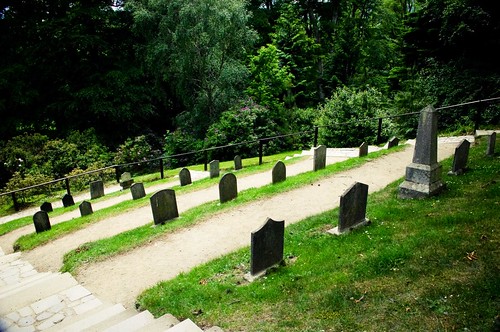
and a pet cemetery (below)was added. The entire parkland was completed around 1880.

IMGP1762-47

Today, the home is a tourist attraction, has a 18 hole golf course, a beautiful waterfall, and even has a Ritz Carlton hotel nearby commanding some of the best views of the mountains.

More information about the Powerscourt House & Gardens can be found at:

www.powerscourt.ie

IMGP1725-11

For more pictures from the gardens, please see my flickr site here.

Share

A Day trip to Malahide Castle

IMGP2325-4

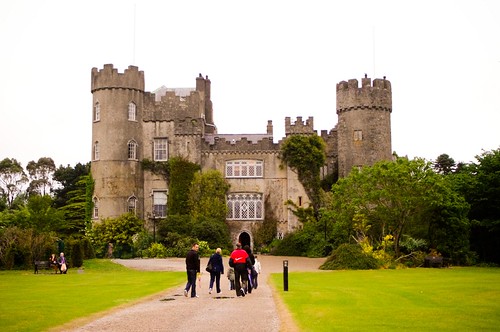
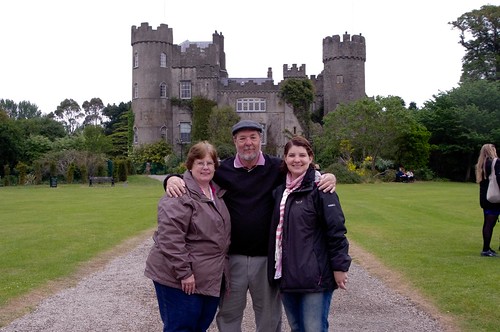
Malahide Castle is one of the oldest and most historic castles on the East Coast of Ireland, just North of Dublin. From 1185 until 1975, (Nearly 800 years) it was the home of the Talbot family – with only one short exception – the period from 1649-1660, when Oliver Cromwell granted it to Miles Corbet after the Cromwellian conquest of Ireland. (Miles Corbet was later hanged and the home restored to the Talbot family.)
IMGP2322-1

In 1169, at the time of the Anglo-Norman invasion, Malahide township was under the control of Hammund Mac Turkill, the last Viking King of Dublin. As the Normans gained land under Henry II starting in 1174, they were granted out to English noblemen. The actual estate began in 1185, when Richard Talbot, a knight who accompanied England’s King, Henry II to Ireland in 1174, was granted the “lands and harbour of Malahide” (something like 600 acres). Strongbow (I seriously love this guy’s name) was granted the remainder of Leinster county.
IMGP2328-7

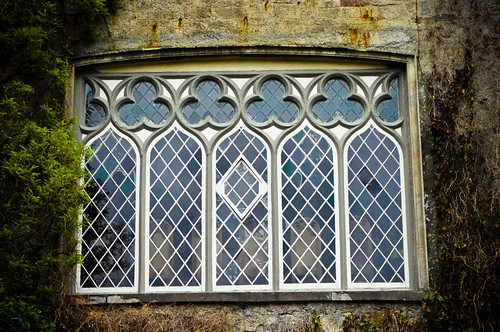
The oldest parts of the castle date back to the 12th century, including the current cafe area and a circular staircase which led to the original 13th century keep. Starting during Edward the IV, the building was added on to. In the 1640’s, under Cromwell, the building itself, old moats, and walls started falling into disrepair as they were filled in and/or harvested for stone building projects. In 1700, the Talbots worked to restore the building to live-able condition, tearing down the fortifications – and vowing that never again should the castle be held by “userpers”. In the place of the fortifications, they planted evergreens on the grounds and started the botanical gardens. The round towers also added in 1765, and several of the windows (including the ones in the great hall) were enlarged. In the years between 1765 and 1782, there was a fire which damaged the west wing of the castle. During the restoration, drawing rooms were added and alternations to the bedrooms (raising ceilings / floors) were made.

One feature on the inside (no pictures allowed inside during the internal tour) is a beautiful Oak Room with carved 16th century wood paneled walls and fireplace. The carvings are all out of the bible, and it is known as one of the best examples of this type of carving in Ireland. The Oak Room itself was expanded in 1820 when the entrance porch was added.
IMGP2323-2

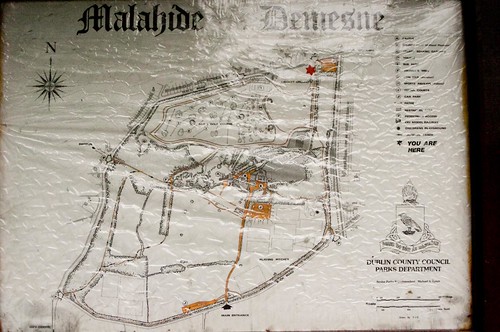
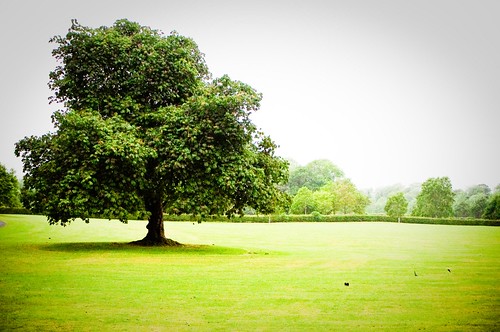
Today, the castle and gardens encompass some 260 acres of parkland (which consist of wooded areas, cricket greens, soccer fields, a golf course, numerous hiking trails, tennis courts, etc.) and the Talbot Botanic Gardens. The Demense as the parkland is known, is one of the few surviving examples of 18th century landscaped parks, and the Botanic Gardens are known for their many plants from the southern hemisphere and the Victorian conservatory. The castle and grounds can easily be seen in a day trip from Dublin (as is evidenced by me taking my mom while she was visiting) and offers a good day out in good or bad weather. (I recommend trying the food at the cafe inside the castle – delicious!)
IMGP2334-12

For more information, please see the Malahide Castle Website at:

http://www.malahidecastle.com/history.asp

Share