Making Bibs

Bibs for Orliath

Over the weekend, I dug out the sewing machine. The funny thing is that I often get asked about ‘fixing’ things using my sewing machine, and the only time that I ever do get out the machine is if someone else asks me to do something for them. I’m not the world’s best at sewing, nor am I very fast at it. To be honest, it is my least favorite “crafty” thing to do, but if I have to I can do it. The result is that when the machine is out (about once every 6-8 months) I go through and “binge sew” on it – to repair everything that needs reparing, make what needs making, and then call it good. I then pack up the machine and it doesn’t see the light of day for another 6-8 months.
Bibs for Orliath

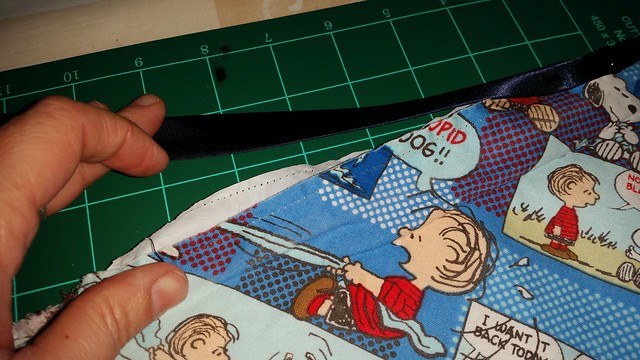
This time, I was asked to repair 4 bibs for Orliath, a gorgeous little girl who wears bibs daily. Sadly, she is confined to a wheelchair, and when I got the bibs, I ended up having to take them apart and remove the binding / ties and then re-sew and replace the binding. You see, the bibs that I was asked to repair are basically 2 pieces of poplin (cotton) fabric with a thin piece of plastic in between (they crinkle when they’re moved).
Bibs for Orliath

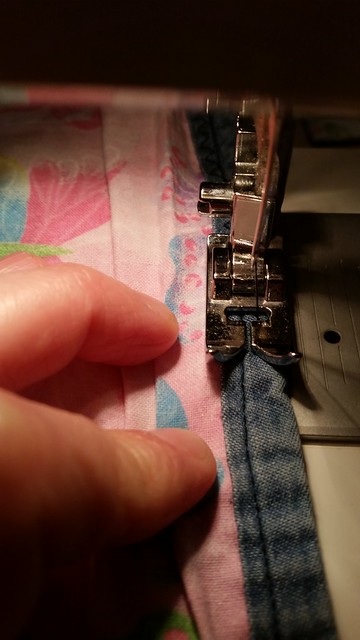
They were sewn with a single stitch on two fold binding tape around the outside edge. The end result was that they came apart after only a (relatively) few washings as the fabric shrank / stretched. It’s quite time consuming and challenging for me – with my limited patience and sewing experience.

Bibs for Orliath

After getting frustrated, I chatted to my mom, dad, and grandma (dad and grandma make quilts) and I posed the problem to them. They told me that it might be faster to make the bibs brand new – and sewn at least twice – once on the inside fabric pieces with a single stitch, and the other with zig zag stitch on the double sided bias tape to effectively give it 3 levels of stitching to “hold”. Once I had the concept – I decided that I could cut a bunch of fabric, and then properly put them together so that they’d need fewer repairs in the future. With the right fabric, I could also give something that’s waterproof and easy to clean – but also soft and not so noisy.
Bibs for Orliath

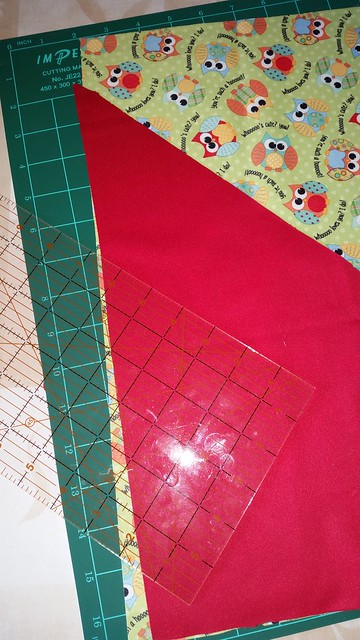
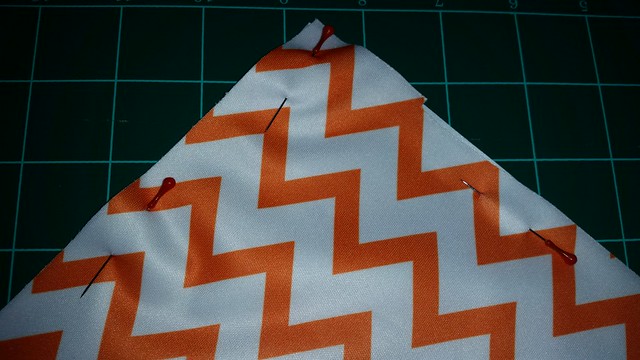
And so it began. I looked on eBay, and found something called PUL fabric – PUL stands for Polyurethane Laminate fabric – and the polyurethane is bound with soft t-shirt and microfiber (to eliminate the “crinkle noise) using an eco friendly adhesive. From here, I decided to try my hand at “creation” using the old bibs as an example. Using the old bibs as a “template” for size (you can see the red piece from one of the bibs I took apart), I started cutting out multiple triangles.
Bibs for Orliath

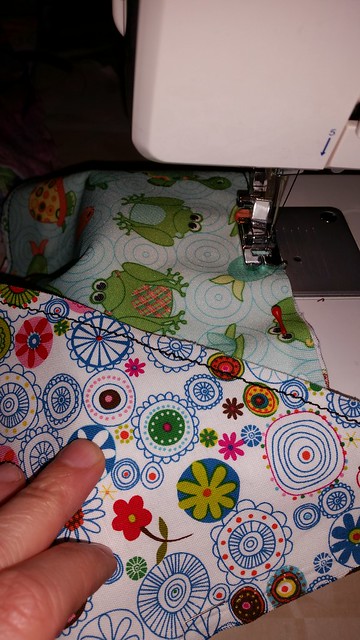
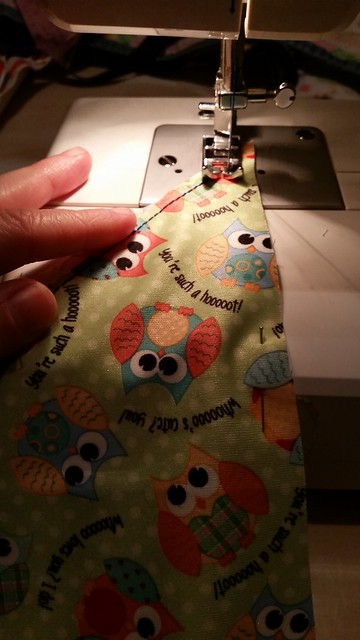
Then, I pinned and sewed the wrong sides together along the edges.
Bibs for Orliath

Bibs for Orliath

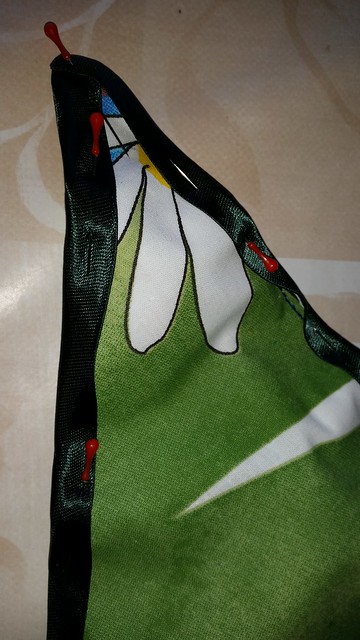
Trimming the excess fabric edges, I then pinned on the satin bias tape and made corners. Now, I went back and did the zig zag stitch over the edges.

Bibs for Orliath

Bibs for Orliath

The end result I think turned out pretty well in my opinion – Orliath ended out with 4 repaired bibs (top of the picture and 5 new bibs from scratch. They’re not perfect (I still have trouble sewing straight seams and keeping the bias tape even on both sides) but they will hold up to washing, chewing, and food – and that’s what counts.


Bibs for Orliath

Share

Monasterboice Abbey, County Louth, Ireland

Sunday Drive around Drogheda Part III (Final)

Monasterboice Abbey dating from 560 AD. 3 high crosses and round tower date to 10th century.

From Old Mellifont Abbey, now that the weather was clearing up a bit, I continued my Sunday drive another 8km (about 4 miles) down the main road further into the countryside to check out Monasterboice Abbey. With each passing kilometer, I was effectively moving back in time (Drogheda founded in 1194, Mellifont Abbey founded 1142) and in history.

Monasterboice Abbey dating from 560 AD. 3 high crosses and round tower date to 10th century.

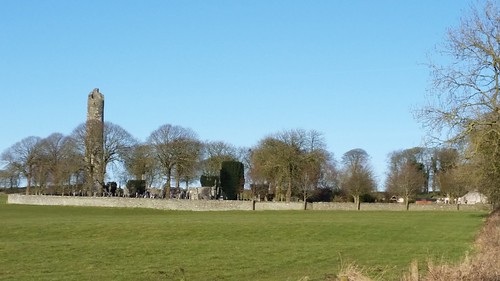
The area in and around Monasterboice has had a long history. It’s a free site which you can visit, and it sits in the middle of several fields and down a long single track lane road. As you approach, you can see that it was a pretty impressive settlement – especially with the round tower visible from far away. Closer up, the gates reveal that there are the old style “steps” which kept the abbey secure and held in the livestock – but allowed for entry/exit of people.

Monasterboice Abbey dating from 560 AD. 3 high crosses and round tower date to 10th century.

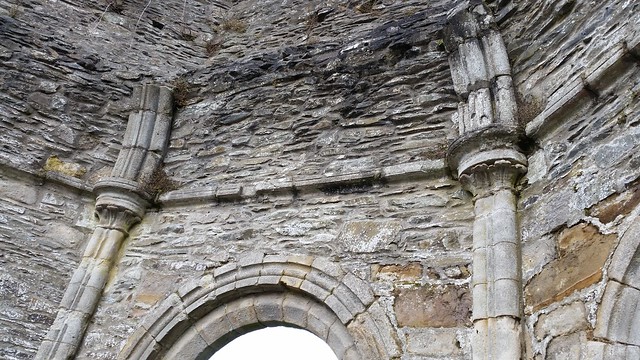
The region has some pre-christian artifacts that have been discovered, though it’s unclear how they relate to this particular site and religious practices. The “current” site at Monasterboice was founded by Saint Buithe sometime at the end of the 4th century / beginning of the 5th century AD (Saint Bruithe died in 521 AD). It is from the Saint that the nearby River Boyne gets its name.
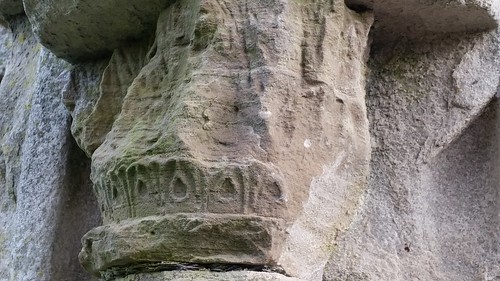
Monasterboice Abbey dating from 560 AD. 3 high crosses and round tower date to 10th century.

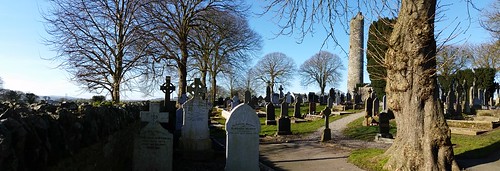
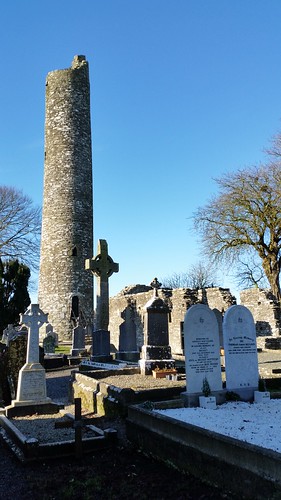
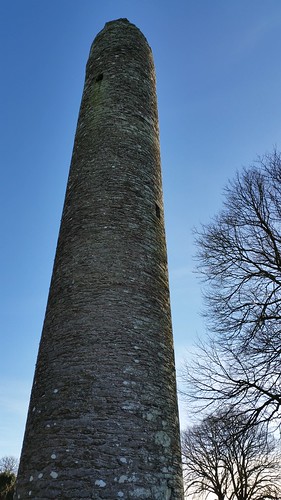
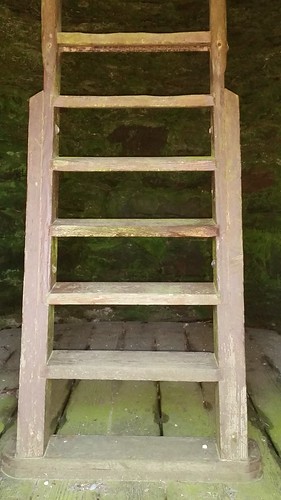
Other than a list of the Abbots who served the Abbey between 759 and 1122, there is little known about the history of the monastery. Some documentation shows that the Monasterboice was raided by the Vikings. The 30 Meter high (110 foot) Round tower was built in the 9th century to help see the raiders before they came. The 4 story tower served both as the watchtower/ belfry (to warn of attack) and also the treasury where books, relics, and other religious items were kept. It was also a place of refuge for the monks in times of need (The door is part of the way up the wall, accessed by a ladder which was pulled into the door during raids). (looking up at the tower from ground level below, and the ladder inside).

Monasterboice Abbey dating from 560 AD. 3 high crosses and round tower date to 10th century.

Monasterboice Abbey dating from 560 AD. 3 high crosses and round tower date to 10th century.

In 950s AD, (Some 400 years after Monasterboice’s founding) the Vikings finally did capture the site and held on to it until 968 AD when there was a great slaughter of the Vikings in the region by Brian Boru (Leader of the Irish) in an attempt to drive them out of the region. They were only temporarily successful, however, as the Vikings did continue to raid the region. The Round tower and parts of the complex were burned in 1097 along with all the books contained in the monastery.

Monasterboice Abbey dating from 560 AD. 3 high crosses and round tower date to 10th century.
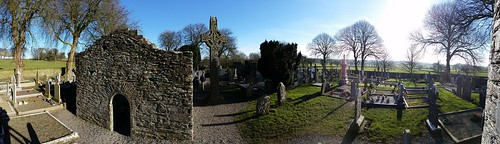
(view from round tower steps looking toward the South church)

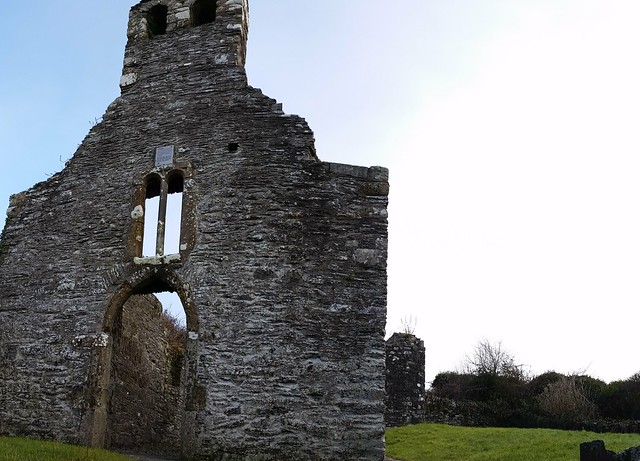
Finally, in the 1100’s the Normans came to Ireland, and it was the beginning of the end for the settlement at Monasterboice. Once Old Mellifont Abbey was built in 1142, the main facilities here slowly went into decline. By the 13th century, only a small parochial church presence was maintained in 2 small church buildings (built in the 14th century) the ruins of which can still be seen today.

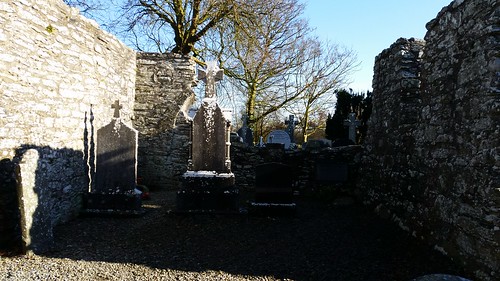
The South Church – formerly made up of Nave and Chancel, with archway in the back wall:

Monasterboice Abbey dating from 560 AD. 3 high crosses and round tower date to 10th century.

Monasterboice Abbey dating from 560 AD. 3 high crosses and round tower date to 10th century.

Monasterboice Abbey dating from 560 AD. 3 high crosses and round tower date to 10th century.

Monasterboice Abbey dating from 560 AD. 3 high crosses and round tower date to 10th century.

Monasterboice Abbey dating from 560 AD. 3 high crosses and round tower date to 10th century.

The North Church – where the east windows and most of the “gable” are gone:

Monasterboice Abbey dating from 560 AD. 3 high crosses and round tower date to 10th century.

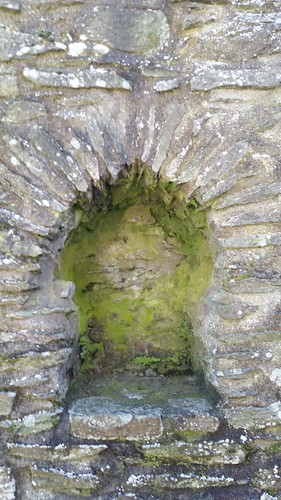
Icon niche:

Monasterboice Abbey dating from 560 AD. 3 high crosses and round tower date to 10th century.

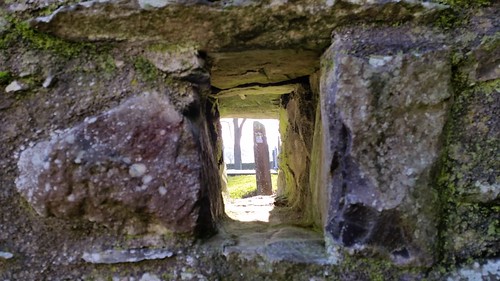
Window:

Monasterboice Abbey dating from 560 AD. 3 high crosses and round tower date to 10th century.

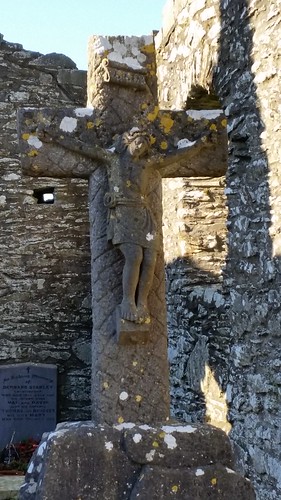
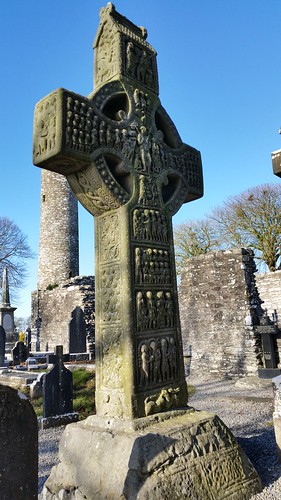
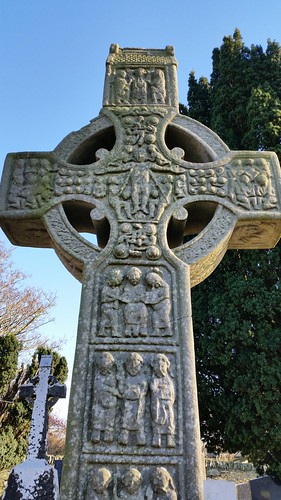
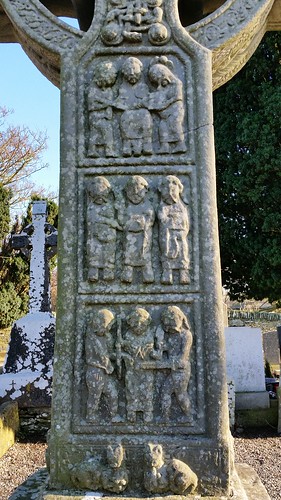
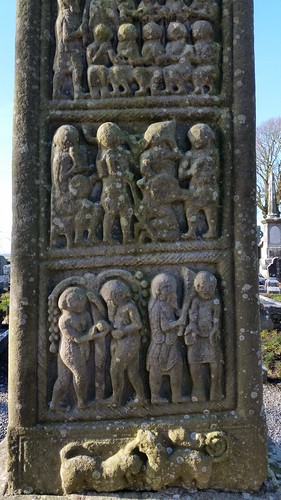
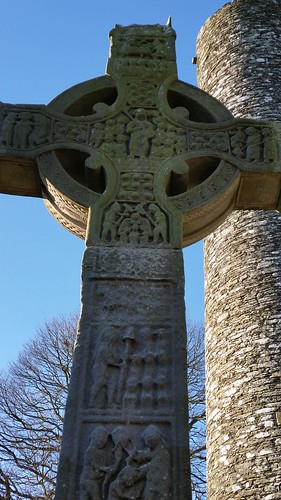
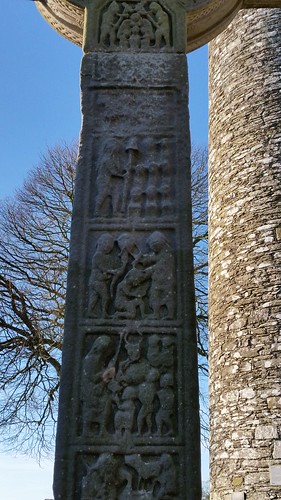
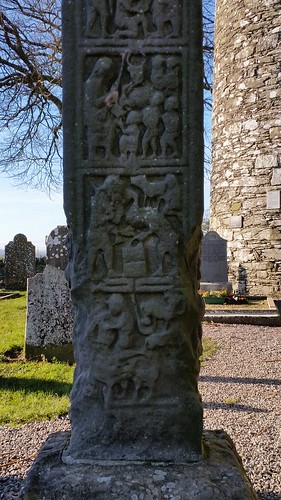
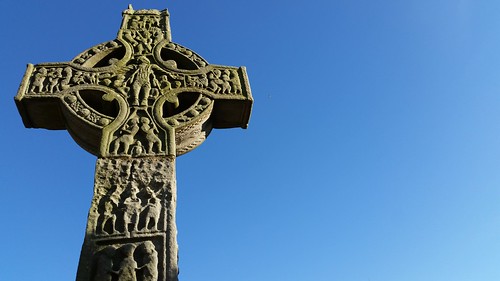
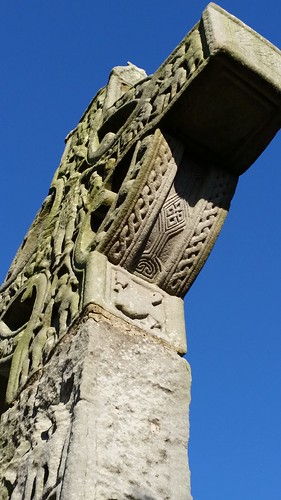
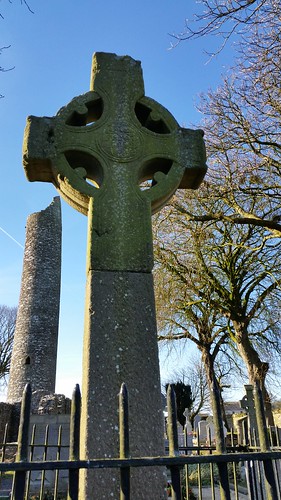
In addition to the impressive Round tower from the 10th Century, and the ruins of the 2 churches, there are also 3 high crosses made of carved sandstone on the site, two of which are supposed to be the finest in all Ireland. These High Crosses were used to tell Biblical tales to those that couldn’t read (similar to how the Gothic churches used the stained glass windows a few centuries later). The most famous of the High Crosses is Muiredach’s High Cross, and it is 5.5 meters (16 feet) high and sits just to the right as you enter. The cross is named after the abbott at the time it was built (Muiredach mac Domhnaill) who died in 923 AD, and whose name is inscribed on the base.

Monasterboice Abbey dating from 560 AD. 3 high crosses and round tower date to 10th century.

According to Sacred Destinations website the carvings on the Muiredach’s cross represent a theme of Sin/Sinners and Christ’s saving of the people. (See the linked site for a much more detailed explanation of all 3 crosses).

Monasterboice Abbey dating from 560 AD. 3 high crosses and round tower date to 10th century.

Monasterboice Abbey dating from 560 AD. 3 high crosses and round tower date to 10th century.

Monasterboice Abbey dating from 560 AD. 3 high crosses and round tower date to 10th century.

Monasterboice Abbey dating from 560 AD. 3 high crosses and round tower date to 10th century.

The second cross is called the “west cross” or the high cross – and is next to one of the church ruins / directly across from the round tower. This cross is about 7 meters (23 feet) high. It’s slimmer than the others but actually has more carving due to its respective height. This too dates to around the 900 ADs and has a theme of miracles and Heroism performed.

Magalithic Ireland website has another decent description of the depictions on this cross but include Moses smiting water from a rock, David with Goliath’s head, and Samuel Anointing David, and the Resurrection to name a few.

Side 1:

Monasterboice Abbey dating from 560 AD. 3 high crosses and round tower date to 10th century.

Monasterboice Abbey dating from 560 AD. 3 high crosses and round tower date to 10th century.

Monasterboice Abbey dating from 560 AD. 3 high crosses and round tower date to 10th century.

Monasterboice Abbey dating from 560 AD. 3 high crosses and round tower date to 10th century.

Monasterboice Abbey dating from 560 AD. 3 high crosses and round tower date to 10th century.

The third and final cross on the site is known as the North Cross, and is very simply carved. It was smashed by Oliver Cromwwell’s forces but has been repaired since, and the base has also been replaced. It’s contained behind a metal fence with the original shaft propped nearby and along side it is a sundial and a few “ruine” stones.

Monasterboice Abbey dating from 560 AD. 3 high crosses and round tower date to 10th century.

Monasterboice Abbey dating from 560 AD. 3 high crosses and round tower date to 10th century.

Personally, I found the place quite peaceful on a Sunday morning. There were a few dog walkers out enjoying the countryside as I pulled in, and an older couple tending the family graves. As we were about to leave, they struck up a brief conversation asking where I and a couple others exploring the site were from. Amusingly, the other two ‘visitors’ were also from the US and proceeded to comment on the heritage and history of Ireland. 🙂 I recommended a few other local sites, and they headed on their way.

Monasterboice Abbey dating from 560 AD. 3 high crosses and round tower date to 10th century.

If you’d like to see a few more pictures of the location, you can see the full set here.

Share

Old Mellifont Abbey

February day trip around Drogheda, Part II.

Old Mellifont Abbey dating to the 11th Century AD.

Yesterday, I told you about a brief visit to the town of Drogheda. After I had a coffee to warm up, I decided that it was worth driving the 10 km through the countryside to the Old Mellifont Abbey Ruins. The weather was starting to look more promising, and the fog was starting to burn off the hilltops.

Old Mellifont Abbey dating to the 11th Century AD.

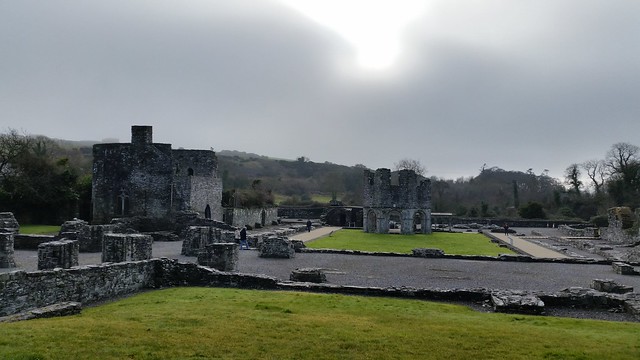
I was hopeful that the fog would be at the Abbey Ruins still, to make for some interesting photographs. Lucky for me, when I arrived, the visitor center (formerly Ireland’s first youth hostel) was closed, there was only one small family about, and we had the place pretty much to ourselves because of the cold and poor weather. As the day warmed up though – you can see in the pictures that the fog turned to sun and changed the mood entirely.

Old Mellifont Abbey dating to the 11th Century AD.

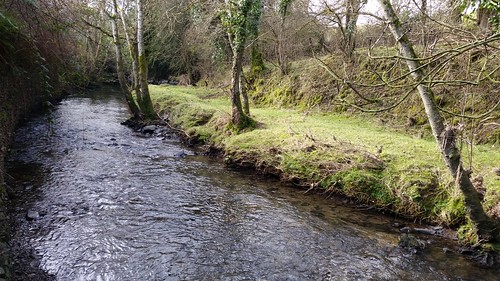
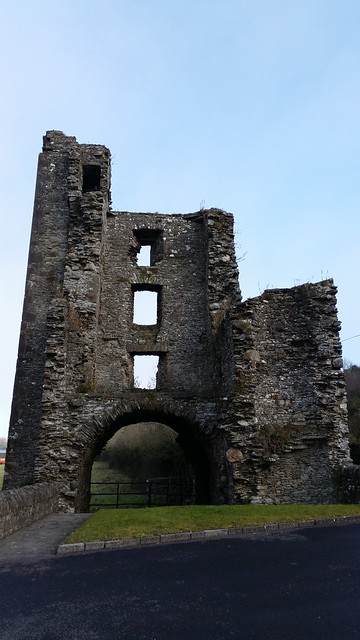
Old Mellifont Abbey was founded in 1142 by St. Malachy and was one of the first Cistercian Monasteries in Ireland. It sits on the river Mattock, which runs cheerfully bubbling through the countryside of green rolling hills. By 1170, the abbey had become an example for other abbeys built in Ireland and France architecturally. It was populated by 100 monks and 300 lay persons at the height of its influence. In 1539, it was closed (Henry the VIII) and taken over becoming a fortified house (the entry gate dating to the 15th century below).

Old Mellifont Abbey dating to the 11th Century AD.

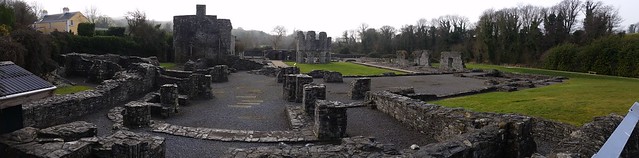
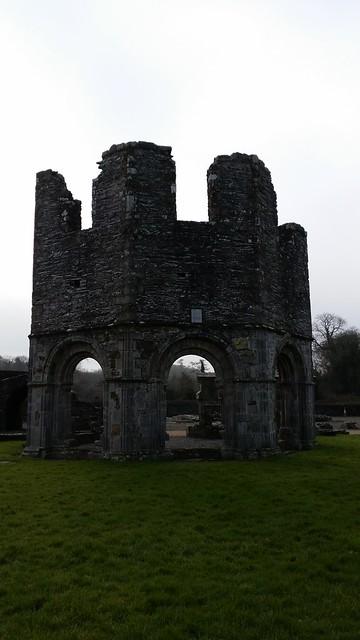
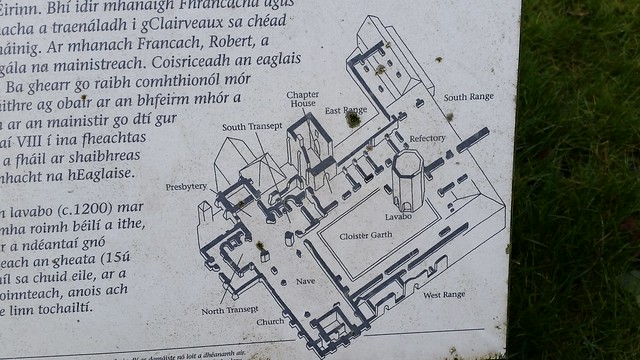
In 1690, William of Orange used the fortified house at Mellifont Abbey as his headquarters during the Battle of the Boyne. Sadly, not long after the house went into ruins. There are only a few portions that are visible. You can walk about and see the knee high wall remnants for most of the site. The few higher walls that remain are an octagonal shaped section that dates back to the 13th century called the Lavabo. This is where the monks washed their hands before eating.

Old Mellifont Abbey dating to the 11th Century AD.

Reverse side Lavobo and some of the details like the arches, stonework, and windows:

Old Mellifont Abbey dating to the 11th Century AD.

Old Mellifont Abbey dating to the 11th Century AD.

Old Mellifont Abbey dating to the 11th Century AD.

Old Mellifont Abbey dating to the 11th Century AD.

Old Mellifont Abbey dating to the 11th Century AD.

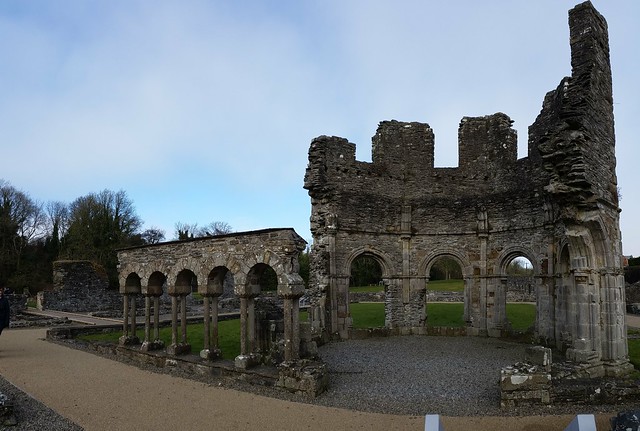
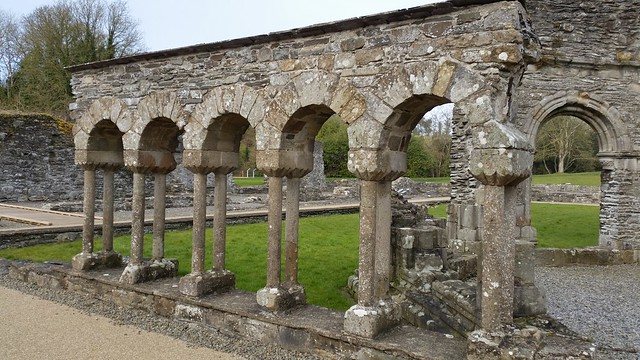
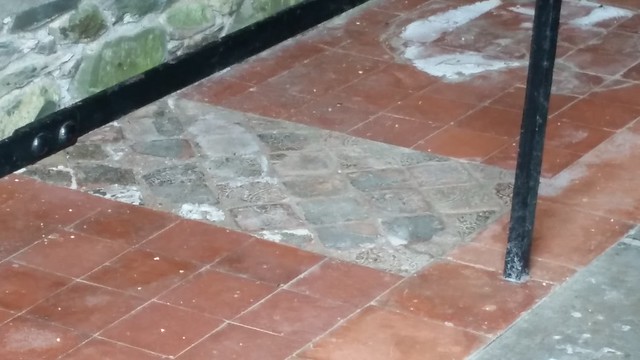
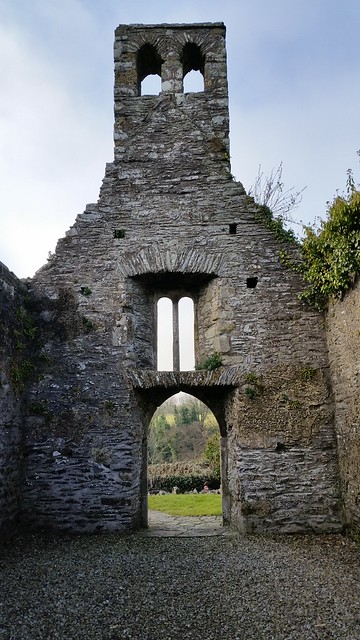
The other sections of interest are the 14th century Chapter house (with Romanesque arches and tiled floor) from about 1220:

Old Mellifont Abbey dating to the 11th Century AD.

Old Mellifont Abbey dating to the 11th Century AD.

Old Mellifont Abbey dating to the 11th Century AD.

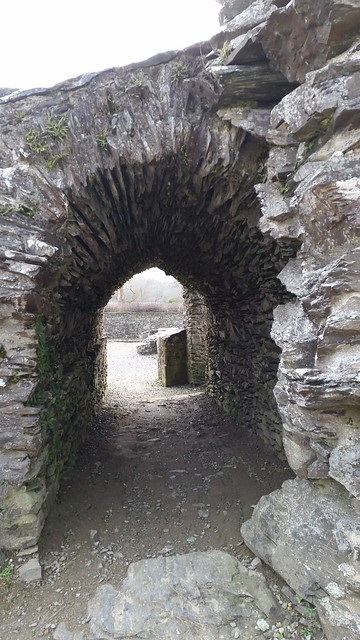
and the arched wine cellar (upper right hand corner of the picture below):

Old Mellifont Abbey dating to the 11th Century AD.

As well as the stone walkway to keep one dry going between buildings:

Old Mellifont Abbey dating to the 11th Century AD.

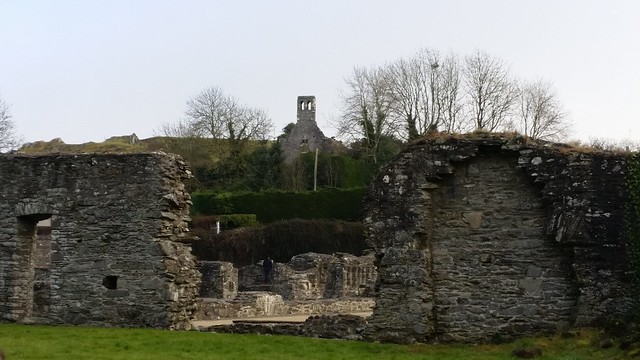
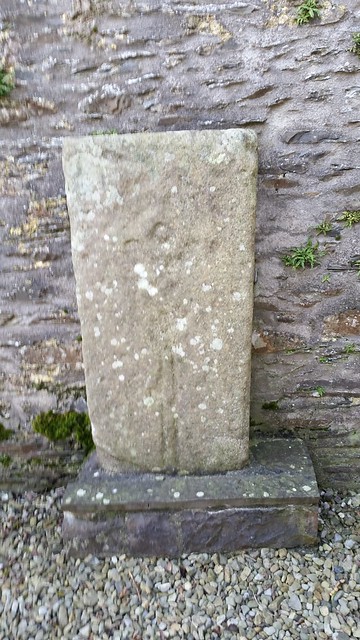
Up the hill there’s the walled ruins of a small chapel (center of the picture directly below) which you can find an old celtic cross gravestone.

Old Mellifont Abbey dating to the 11th Century AD.

Old Mellifont Abbey dating to the 11th Century AD.

Old Mellifont Abbey dating to the 11th Century AD.

Old Mellifont Abbey dating to the 11th Century AD.

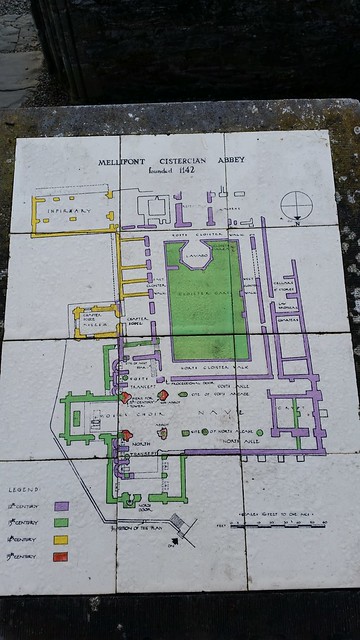
You can see a map of the general layout of the abbey pre -becoming ruins here:

Old Mellifont Abbey dating to the 11th Century AD.

Old Mellifont Abbey dating to the 11th Century AD.

Old Mellifont Abbey dating to the 11th Century AD.

Overall the site is worth a visit just to see the layout, and because it is “free” to visit (not sure about the visitor center). I found out later that the visitor center has a good display of the architectural ruins and artifacts that have been uncovered in the area. I may need to go back to check this out. Otherwise, from here I headed back in time – to the Monasterboice Abbey Ruins – which dated to the viking times (1000 years younger) and was closed with the start of the Mellifont Abbey. More on that tomorrow.

For now, feel free to see more pictures from Mellifont Abbey in my flickr photostream.

Share