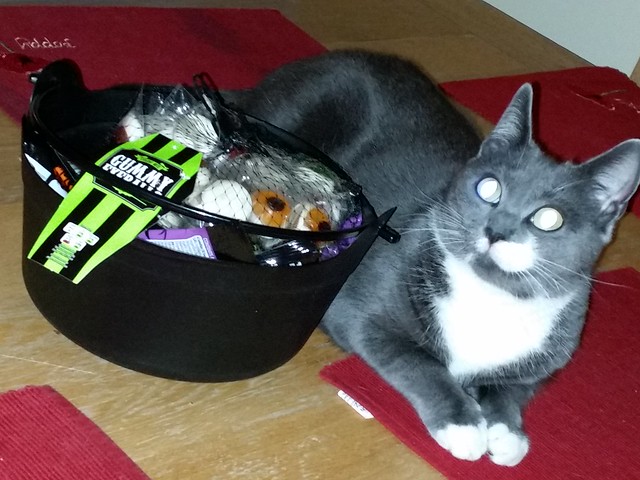
I love Halloween, I always have. Most years, I look forward to dressing up (to anything you want to be -just for a day) and handing out candy to the trick or treaters. This year, though, I wasn’t feeling it. It could be the hours and hours of overtime at work. It could be a poor mood, new house, different neighbors, and or too much going on with trying to get Irish citizenship. It could be just getting over an illness. It could be the lack of me time… but while the thought of parties, dressing up and handing out candy didn’t appeal – it all worked out.
About a week before Halloween, my friend Barbara made a Facebook post that she wanted to go to Tlachtga (aka the Hill of Ward) in Athboy for Samhain celebrations and participate in the annual 2km fire procession to the ring fort. Now, I know of Tara, Knowth, Dowth, and New Grange Neolitic Monuments. But I’d never heard of this place. Tlachtga is very close by (15 KM away) and within site of Tara. It seems that this ring fort (in the middle of a farmer’s sheep pastures) has not received the attention it deserves as a place of importance, which it has yet to receive. Upon reading up about Ireland, I learned one crucial piece of information and decided I had to go, and offered to drive, because this statement left me intrigued:
Tlachtga (pronounced t-CLA-ck-ta) is the place where Irish Halloween began.
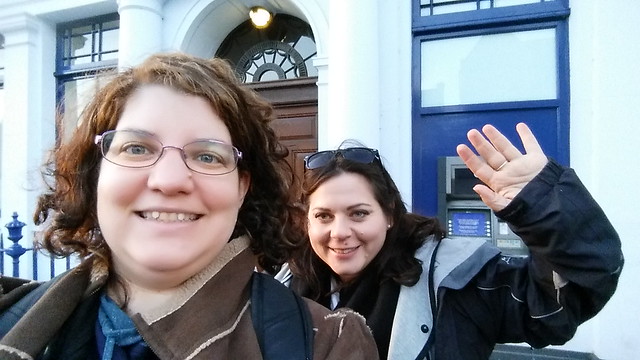
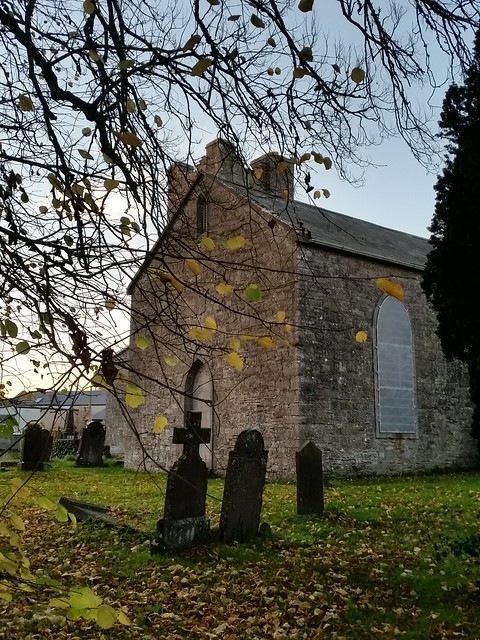
So it was that we left Dublin at 3:30 PM on Halloween Day and headed up the N3 to Athboy, about 35 km North of Dublin. We arrived an hour later, found parking and wandered about Athboy for about 40 minutes (really, the town is not that big). As part of this – we popped over to the old Church of Ireland building which was erected 1770, reuses an old Tower from the Carmelite monestery. I took a few pictures of the building, the cemetery, and noticed that on the North side of the church in the eve – there’s “screaming” man carving. The North side of the church (the Devil’s Side) often has these sculptures to “ward of the Devil” who apparently doesn’t like noise. (Clearly – if that’s the case, then Rock and Roll wouldn’t be known as the “devil’s music”… but that’s a whole other story). A few pictures from the building and the cemetery:
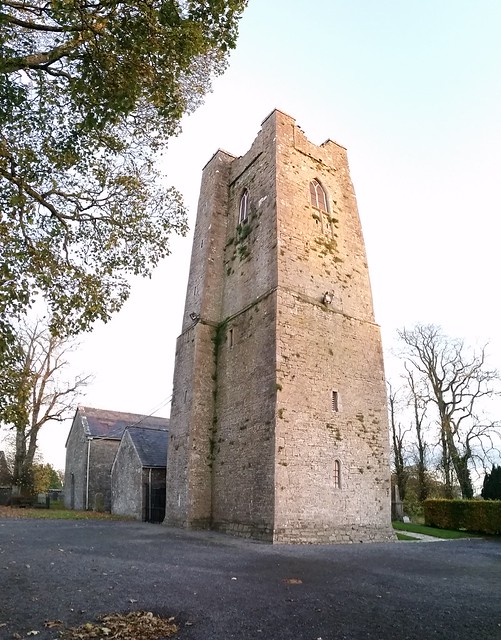
The Carmelite Tower on the front
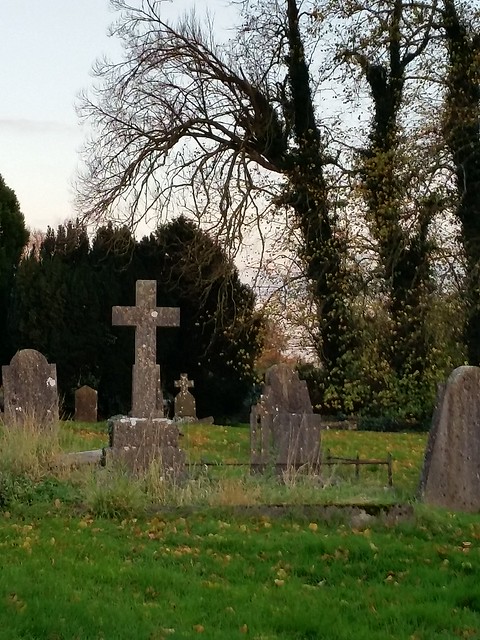
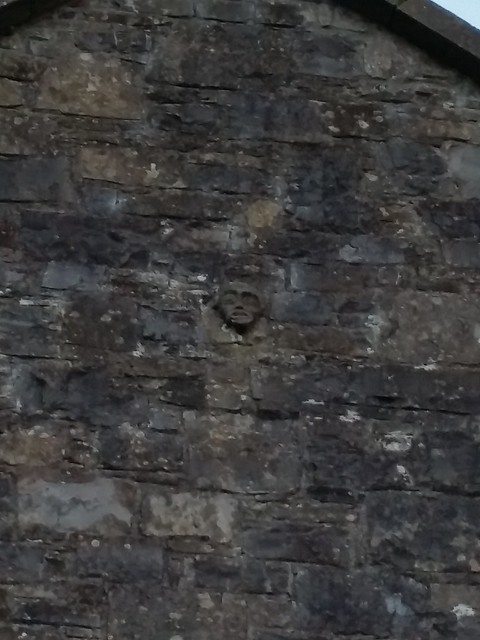
Screaming Man Warding off the devil
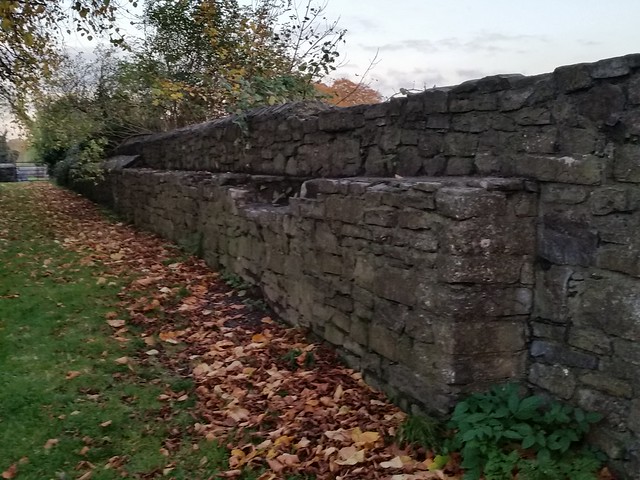
The last of the old castle walls from 1200s which now surround part of the cemetery.
As the sun set, we decided to leave the spooky cemetery and popped into a pub to catch the Rugby world cup, warm up a bit, and have a drink. At 6:45pm, with the darkness outside (and many cars already trying to find parking) we went out into the clear, cool, dry and breeze free October evening.
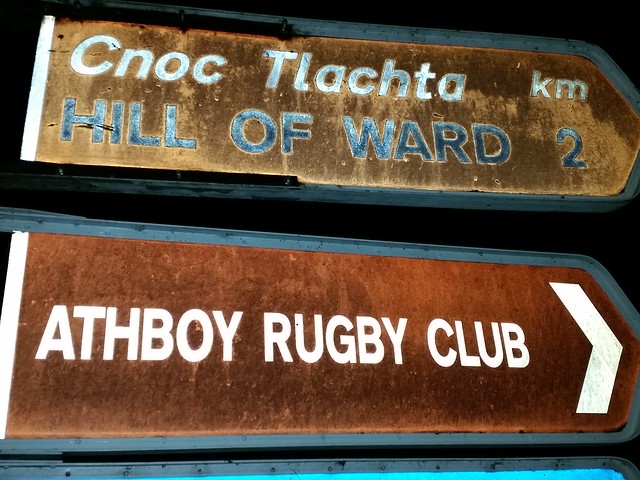
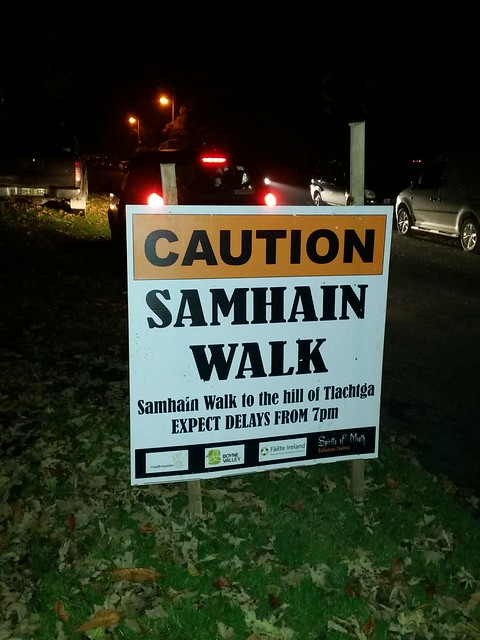
We walked down to the fair green (it’s just up from the petrol station), passing by a sign for the “traffic delays due to Samhain walk” and people were already beginning to gather. There we were handed strips of paper to write our intentions for the coming year, some fire torches, and a lady in a “druidic” costume told us the following:
Tlachtga hill fort This was the place where the Celtic Sun God and Fertility Goddess were celebrated at the year’s end. But most importantly for Hallowe’en, it is the point where the druids felt that this world and the otherworld were closest at the New Year. It was the center of the Great Fire Festival that signalled the onset of winter. The rituals and ceremonies carried out here by the pre-Christian Irish, offered assurance to the people that the powers of darkness would be overcome, and the powers of light and life would prevail. Traditionally, people would converge here from miles around. Then, on Samhain, a congregation would march up the 2km to the hill with torches that were then extinguished. After sunset, the ceremonial New Year Samhain fire was lit from fire and embers that were brought over from the volcanic soil on Howth Island (or elsewhere). Subsequently, new torches were lit from this sacred fire and carried to seven other hills around the county including Tara and Loughcrew, and then on to light up the whole countryside.
Why New Year in Autumn? The Celts / Druids believed that the start of the Autumn darkness symbolized a rebirth, like in a woman’s womb, or a seed. To germinate, a seed is planted in the darkness and germinates and grows slowly in the earth (or the womb) before spring forth into the light. As Autumn grows darker, it is a time of dormancy, of death, and time to go back into the Earth (and/or onself) to rethink and re-emerge in the light, as a “newborn”, or a seedling, or a new chance for the year ahead.
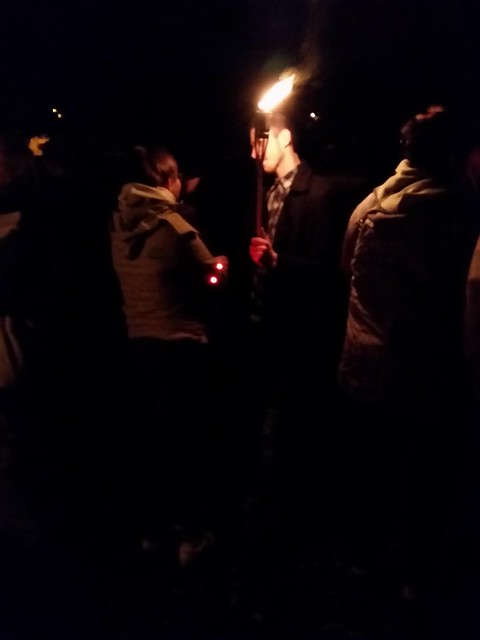
From here, the narrator taught us a little chant / song and gave us an overview of what we’d see/do on the way up and also the ceremony at the fort. We were invited to take one of the few tiki torches, a candle, or other light source, light them, and begin the procession up the hill.
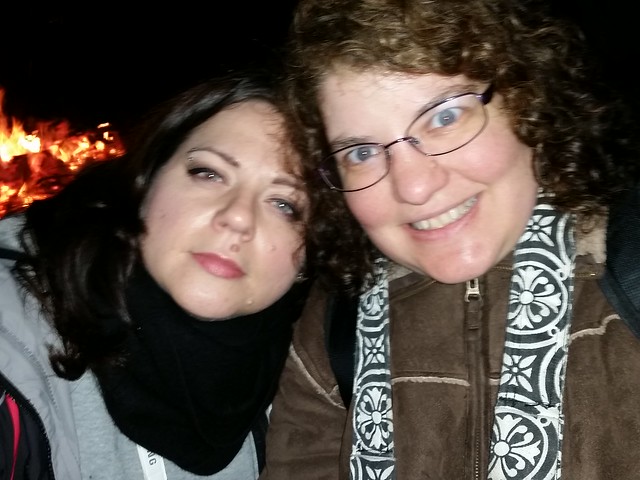
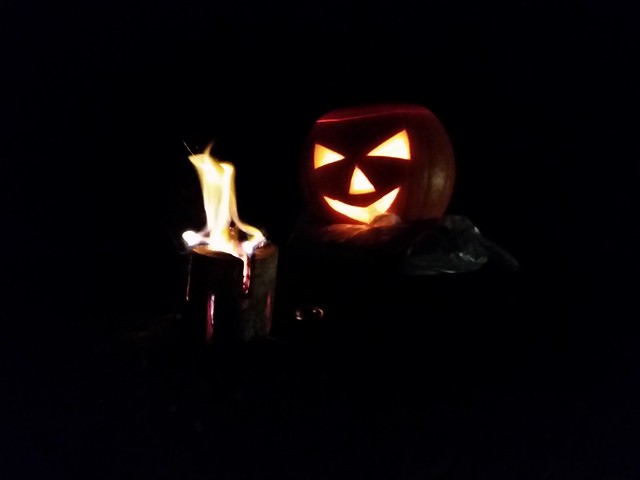
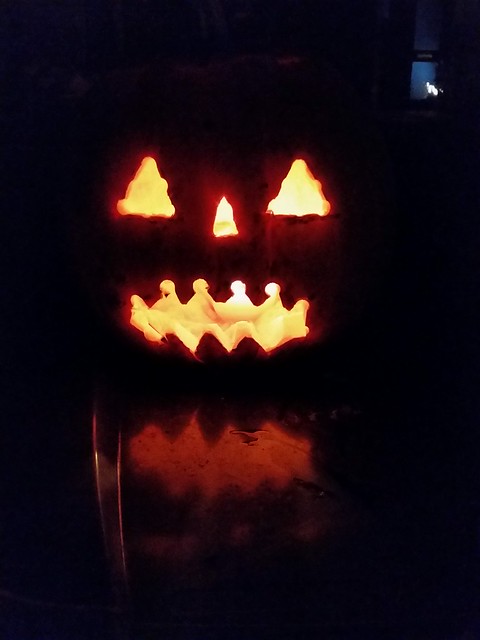
As we walked, we passed by houses – nearly all of which had fire in some form outside. Some had bonfires, some had lit logs, others had lanterns, jack-o-lanterns, candles, or glow sticks to guide our way.
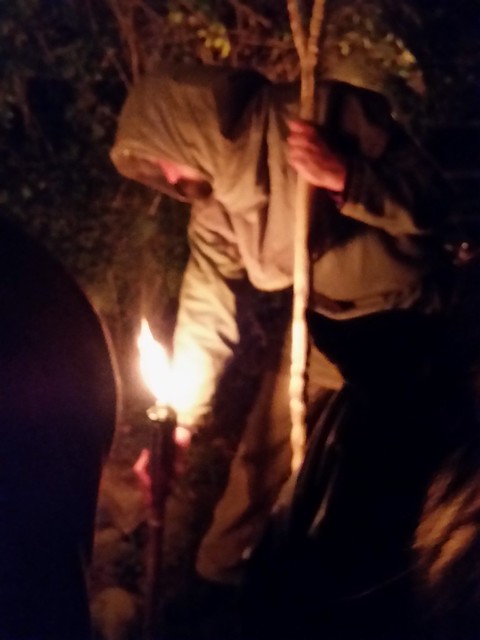
The Druid minding the Druid’s well (below)
Halfway up, we came to the druid’s well. This sacred well hasn’t been renamed to the name of a saint (like many here in Ireland) and people stepped into the well to take a bit of the magical (supposed to have healing properties) water. A man in druid costume stood nearby to help those in and out of the well.
Next to the well, 3 ladies in veiled costumes sat nearby. These were the 3 fates, who spin the tales of our lives. For an offering, you could get a blessing, a fortune, or advice. I crossed the blessing fate with a bit of silver and gold (a euro) donation, and received a lovely blessing from the goddess for the New Year (the goddess knows what is in your heart, and asks that you remain focused. If you are, she will help you make it happen). Barbara chose a different fate, and received some beautiful advice – which touched her deeply.
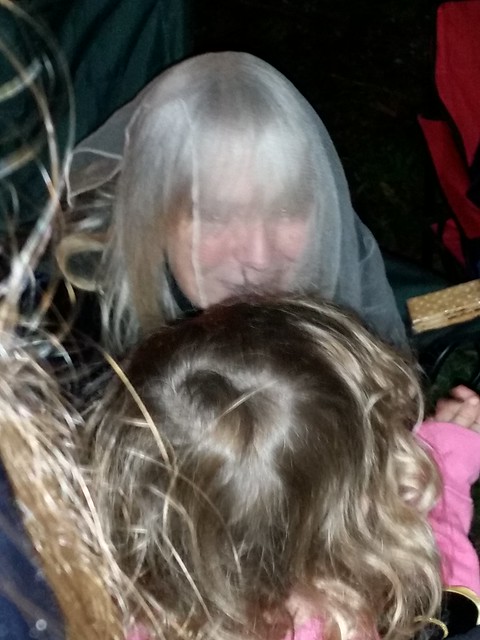
Getting the fortune from one of the 3 “fates”
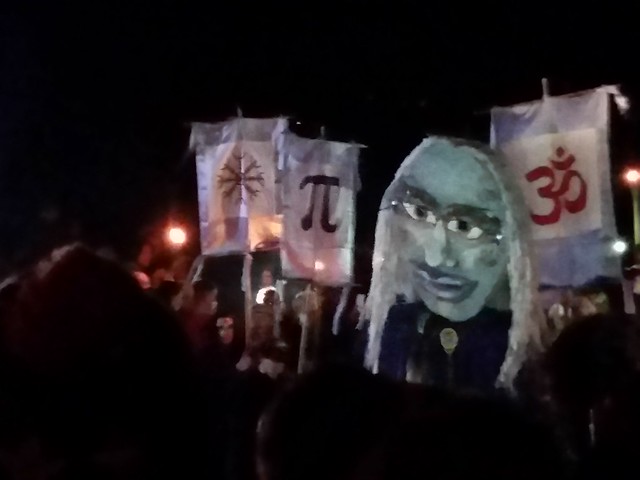
Proceeding on, there was a slight bottleneck as 300 people climbed over a narrow gate into the field. Here we proceed up the hill, past the 4 directional signs and a giant goddess puppet figure, then through a gate lit on either side by a fire. We had arrived. The ring fort makes a natural ampetheater, and about 300 people gathered along the outside of the ring, looking downward to the middle, where the ceremony would take place.
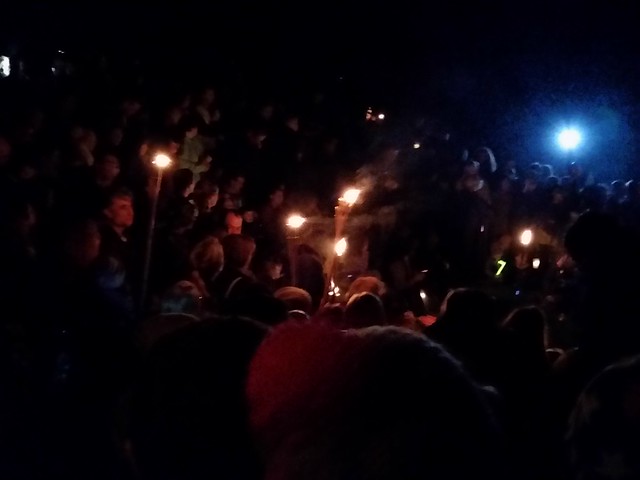
With a drumbeat, the procession into the sacred circle began. Each of the 4 directional banners entered, with the Goddess figure following last.
Our singing chant of:
Tlachtga, lady, goddess fair
Come to us on frosted air
Guide our steps in pale moonlight,
Light our fire this Samhain Night
filled the area. The sacred circle was opened, calling on the 4 elements from each direction, and welcoming people from all over (North America, South America, Asia, Europe, and Australia – sorry you lost the rugby) to the event. We were reminded to turn off cell phones (not everyone did) and to be quiet so that everyone could hear (shhh!!). With that we were told of the story of Tlachtga.
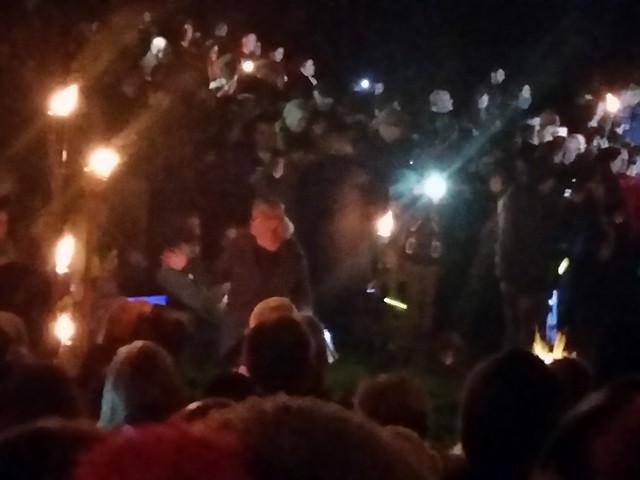
The Story:

Effigy of The Goddess Tlachtga
The figure of Tlachtga is one of the many tragic heroines of Irish myth. Tlachtga is the daughter of Mog Roith, a powerful druid of Munster. Her name, Tlachtga means “earth spear” from tlacht “earth” and gae “spear”, and refers to one of the many Sun goddesses, but she is also the goddess of lightening and storms.
In the story, Tlachtga and her father Mog Roith travel to Italy. There, they seek out the wisdom of a powerful wizard named Simon Magnus. There, they constructed a flying wheel, called the Roth Ramach. Being unafraid and curious, Tlachtga travelled the world (to the North,South,East,West) and gained much wisdom. When she returned to Italy, Mog Roith and Simon Magnus were not happy with her. Simon Magnus’s 3 sons rape her, and then Mog Roith and Simon Magnus cast Tlachtga out – disgraced as a woman. Pregnant and shamed, Tlachtga returns home to Ireland. When she arrives, she is heavily pregnant and goes to the now named after her. There, after a long and painful labor, she gives birth to 3 sons. Just before dying of exhaustion, she gives each of the son’s a name – Doirb, Cumma, and Muach, and promises that as long as their names (and hers) continue then Ireland will be free from domination by strangers. (The 3 sons later have descendants that are the 3 kings – one of each of the provinces of Ireland – Munster, Leinster, and Connaught). Tlachtga dies, and is buried in the ring fort on the hill. Eventually, as we all know, the names were eventually oppressed and forgotten (with the Christianisation of Ireland) and thus, we see Ireland conquered by the Vikings, the English and so on.
With the story now complete, we were reminded that for the last 16 years, the processions have begun again, and that children are remembering and learning the significance of the sacred fires and the story of Tlachtga. History again remembers her name, and Ireland is free once again.
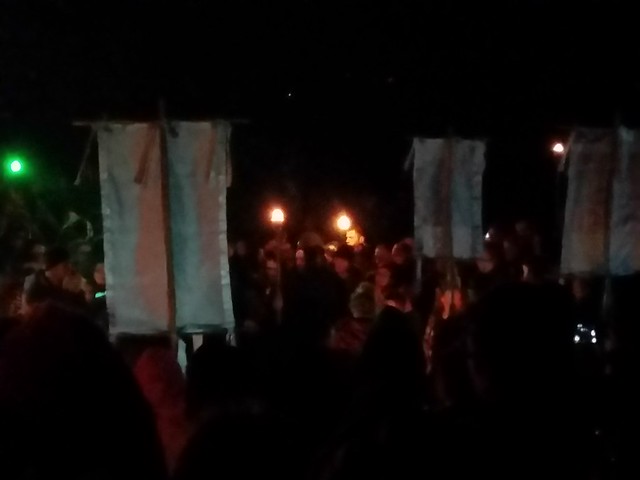
A druid priest came and blessed our intention papers before burning them in the fire to offer them up to the Sidhe (pronounced-She-he- aka earth or mist fairies) to carry into the ether. Then came the remembrances of the spirits. Each person was asked to remember and call out the name of a loved one who had passed since the last procession. To think of them, hold them near to our hearts, and to listen for their words. Then, we all turned to face to the west, and the spirits were to follow the winds to the netherworlds…. as we did, and the spirits were released… a little bit of “magic” happened –
Multiple shooting stars passed over head
much to a few people’s oohs, ahhs, and “did you see that?!?” It made me tear up to think that yes, this is a little bit of the “magic” of the universe, and 2000 years ago, someone stood here and saw the same thing and thought that’s my beloved… sending me a message.
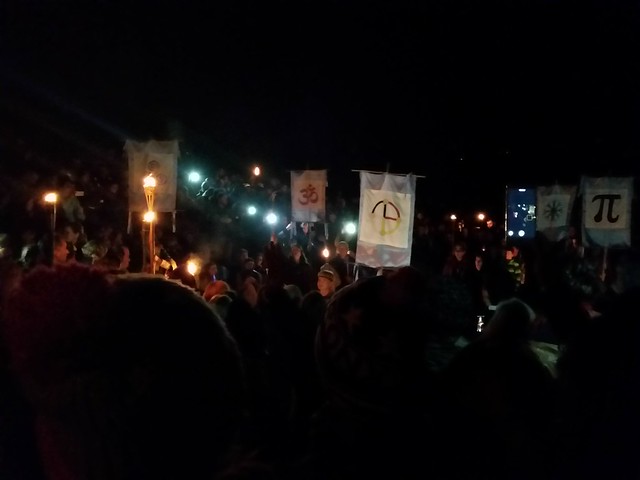
Finally, the circle was closed (with a brief speech from the founder), we sang them out of the ring, and the community were invited to enjoy some brack (traditional cake) and hot tea provided by the lovely Conlon family – the farmers who own the field and generously let us celebrate here. We could also offer a little donation for the organizers / farmer / etc as the event is held solely based on donations.
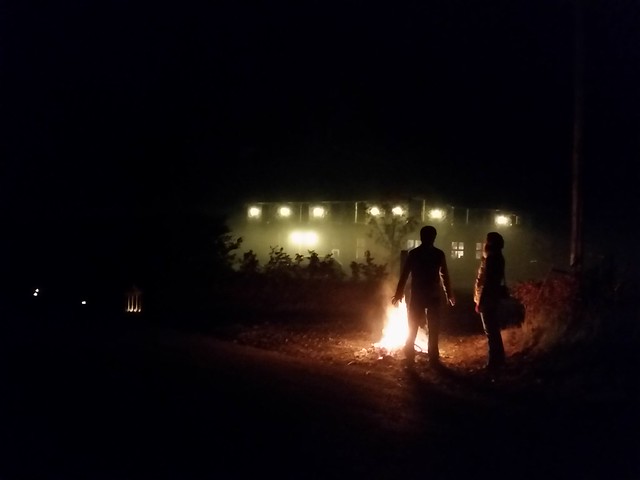
Our tummy warmed by the tea, it was nearly 10 PM. Barbara and I walked down the hill in the dark (most of the fires which greeted us on the way up were down to a few warm coals) and watched the mist and fog turn from tiny wisps to a heavy cover over the countryside. The Sidhe (Pronounced Sheehey or ground fairies) had arrived in full force. We were now shadows of ourselves, silhouettes lit by a few flashlights and the lights of the occasional car on the back country road. The Wheel has turned, the Veil has thinned… I can see why people believed that spirits of the other world would be closer in this place. (Of course, we also looked a bit like a promotional poster for the Walking Dead each time a car passed and all you could see was lights and the outline of a body… but hey, that’s me watching too many horror movies, right?!?)
We drove home from Athboy in the darkness and fog – and arrived back in Dublin just before midnight, the witching hour, where others were setting off fireworks from their gardens or having their own bonfire – continuing a tradition of 2000+ years (a tradition they may not even remember the reason for).
All in all, it was a memorable and magical experience – and one I know I’m blessed to have. One that someday, I hope to pass on to keep Tlachtga and her sons in mind.
Happy Hallowe’en, and Blessed Be!