For some reason, it seems that Germany just has a surplus of abandoned buildings. Perhaps it’s because of the two world wars and the subsequent soviet occupation. Perhaps it’s because the people here respect quality building and simply hope that someday someone will restore these old buildings to their former grandeur. Perhaps it’s because they simply don’t have the time, money, or the “gotta-wanna” to tear them down once they’ve become unsafe.
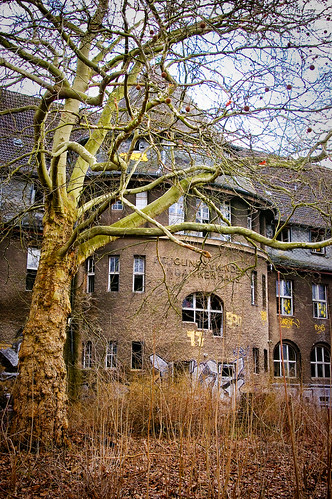
On yet another of our photo group outings (March 13,2010 – yes, I know I’m way behind!) , several of us decided to go up into the North East corner of Berlin (former Soviet territory, which is now sort of an up-and-coming trendy area) near the Weissensee (White lake) to check out an old infant and children’s hospital there – literally named in German – Säuglings – und Kinderkrankenhaus Weißensee (infant and children’s hospital on the White Lake). Getting inside was surprisingly easy – you just needed to walk between an old electrical box on the street at the break in the gate. The main problem is that there’s a tram stop directly across the street – and the opening is on a busy street, so you have to time entry just right so as not to be seen. (Though, I doubt anyone really cares – since there were about 5 other people there and a number of squatters too.) The entire flickr set is here.
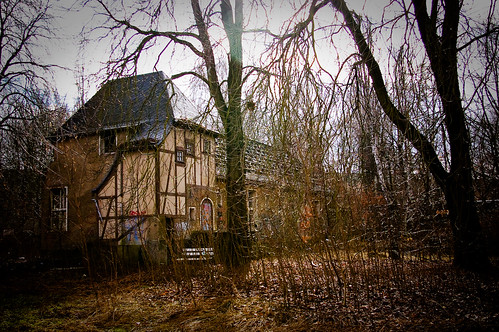
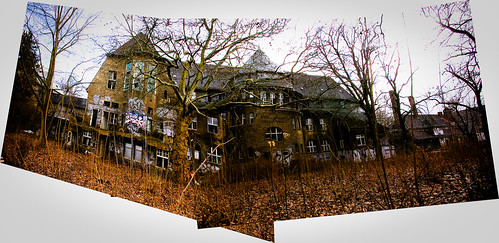
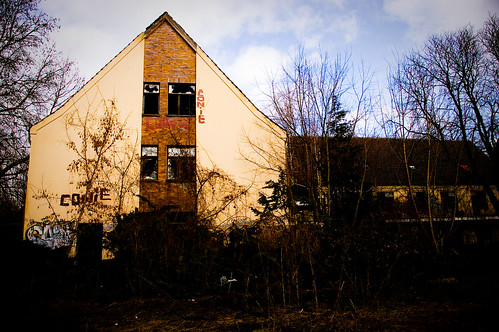
The original building complex (oldest building at the top above) was drawn up by architect Carl James Bühring in 1909. The main building itself was completed in 1911. The plan was that this hospital would help to handle the increasing birth rate in the city. Starting in 1912, other buildings were added and as it grew, this hospital became the first communal childen’s hospital in Prussia. Most notably, there was an on site stable (photo above with the 1/2 timbered architecture) which had cows between about 1912 and 1920, which produced high quality milk for babies in need of breast milk substitute, and also for provided “milk therapy” for older children weakened by sickness. The newest building (below) seems to be the nursing ward/ infirmary added in 1987 with two floors and semi-modern laminate floor tiles.
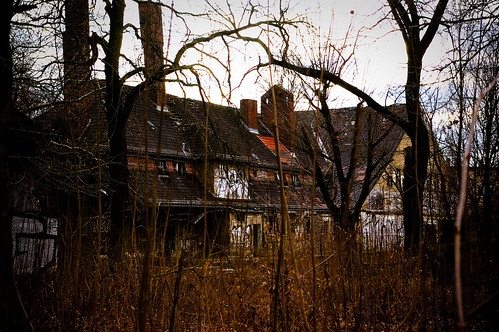
The hospital was closed on 1 January 1997 and sold in 2006 to an investor group. According to stated plans, they want to establish a cancer center on the property, using what they can of the old buildings. To date, no progress has been made, and it’s unclear if they will be able to use any of the property in their plans. The estimated date for the new center to start construction is in 2011. (A few more complex buildings below – Side building, Surgery building toward the main old hospital, an administration building.)
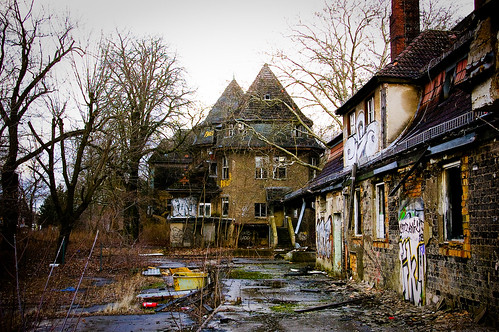
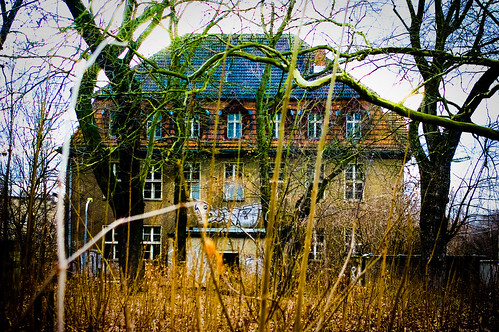
In the meantime, this provided a good opportunity to explore a few of the several buildings and get some nice photographs of the sorry state of these buildings in their decay and deterioration. To say the least, because of it’s easy accessibility, this is an area that has been inundated with graffiti artists, taggers, vandals, and squatters. (On one floor of the infirmary/nursing ward we found an ENTIRE room of people and dog shit – talk about nastiness and stench – which had been repeatedly used for such excretions – and which we quickly ran past.) Anyhow, I hope you enjoy what I think were some of the best photographs of the day.
Main (oldest) building from 1911:
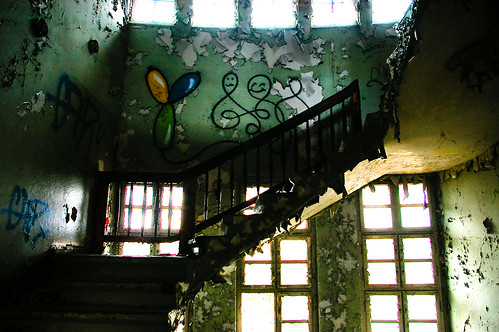
Curved Staircase and large windows
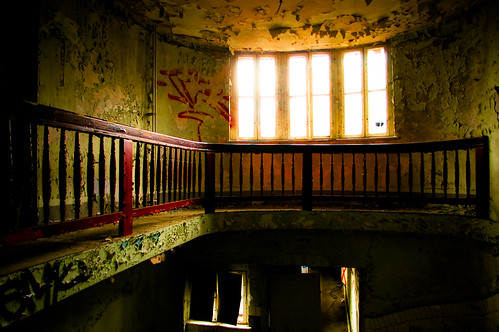
A narrow balcony
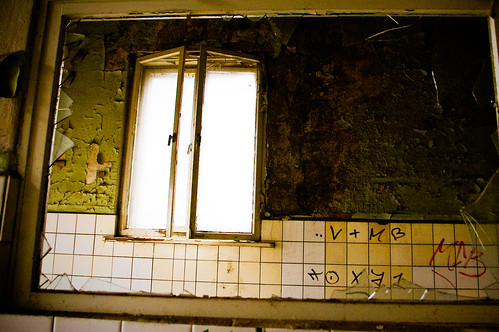
Green Wall & Tile through a broken window.

Operating Room
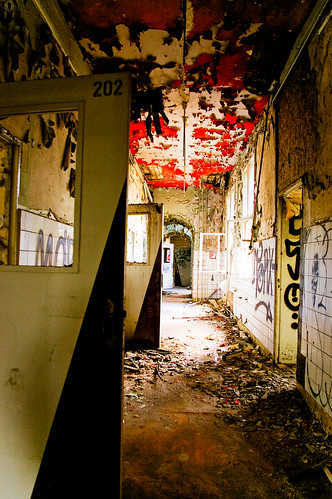
Red Ceiling, Red Half Doors, Red Tile Floors (very creepy)
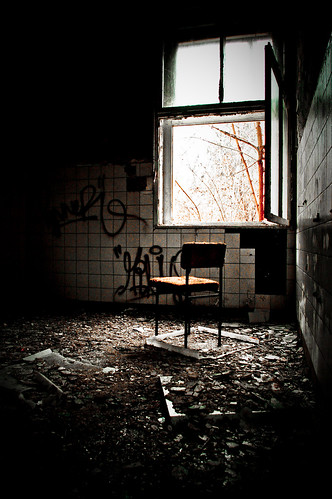
The Lonely Chair
In the Other Buildings (as labelled):
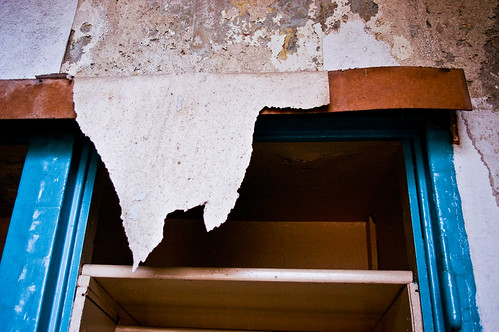
Peeling Wallpaper in the Administration building.
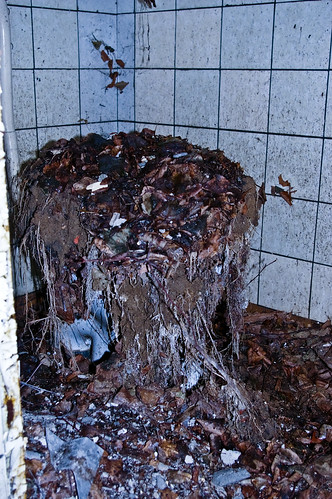
There’s a Toilet under there – collapsed roof in the Stables building
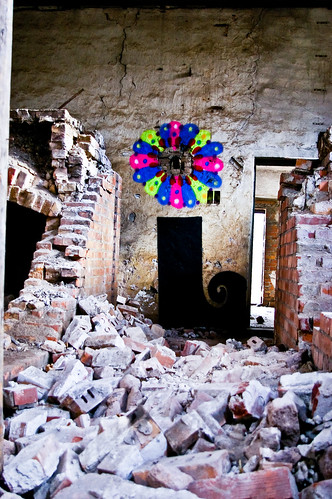
In what would be the Wash house/boiler house – the bricks had been removed from several areas – and piled into a single room – shoulder high.
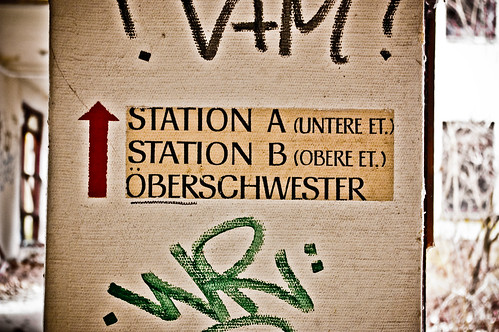
To the Nurses Stations (Infirmary ward)
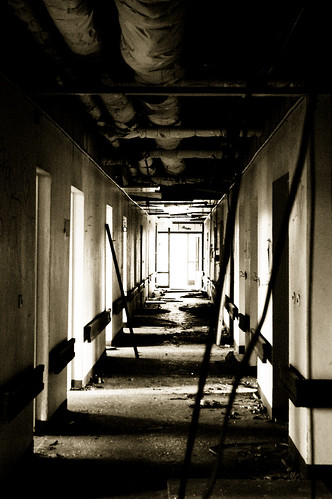
Empty Infirmary Ward
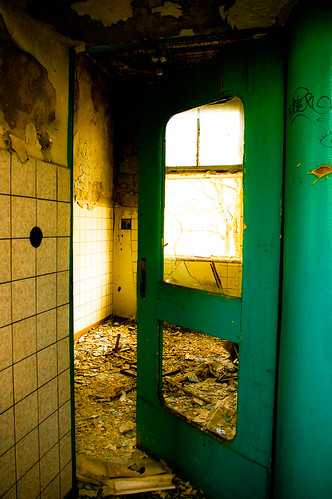
Blue Surgery door (surgery building)
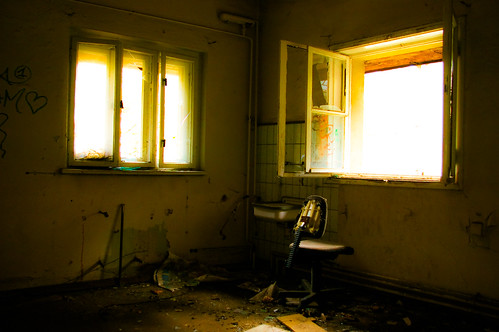
Office Chair in Exam Room (Infirmary Building)
Tomorrow, a post about graffiti. All about Graffiti….